Welcome to the crazy house in Dalat, Vietnam’s most unconventional building, and one of the world’s most bizarre architectural experiences we’ve had.
The Hang Nga guesthouse, officially known as Biệt Thự Hằng Nga, stands as a testament to imagination run wild and represents a complete departure from traditional architectural principles. Designed by Vietnamese architect Dang Viet Nga and opened in 1990, this extraordinary structure functions as both a tourist attraction and operating accommodation, offering visitors the chance to experience architecture that defies conventional logic.
View this post on Instagram
Whether you’re looking for a one-of-a-kind overnight stay in Dalat or simply want to explore one of Vietnam’s most photographed attractions, our review covers everything you need to know about visiting the nga crazy house in Dalat.
Note: This blog post contains affiliate links. If you make a purchase based on our recommedation, we may make a comission at no cost to you.
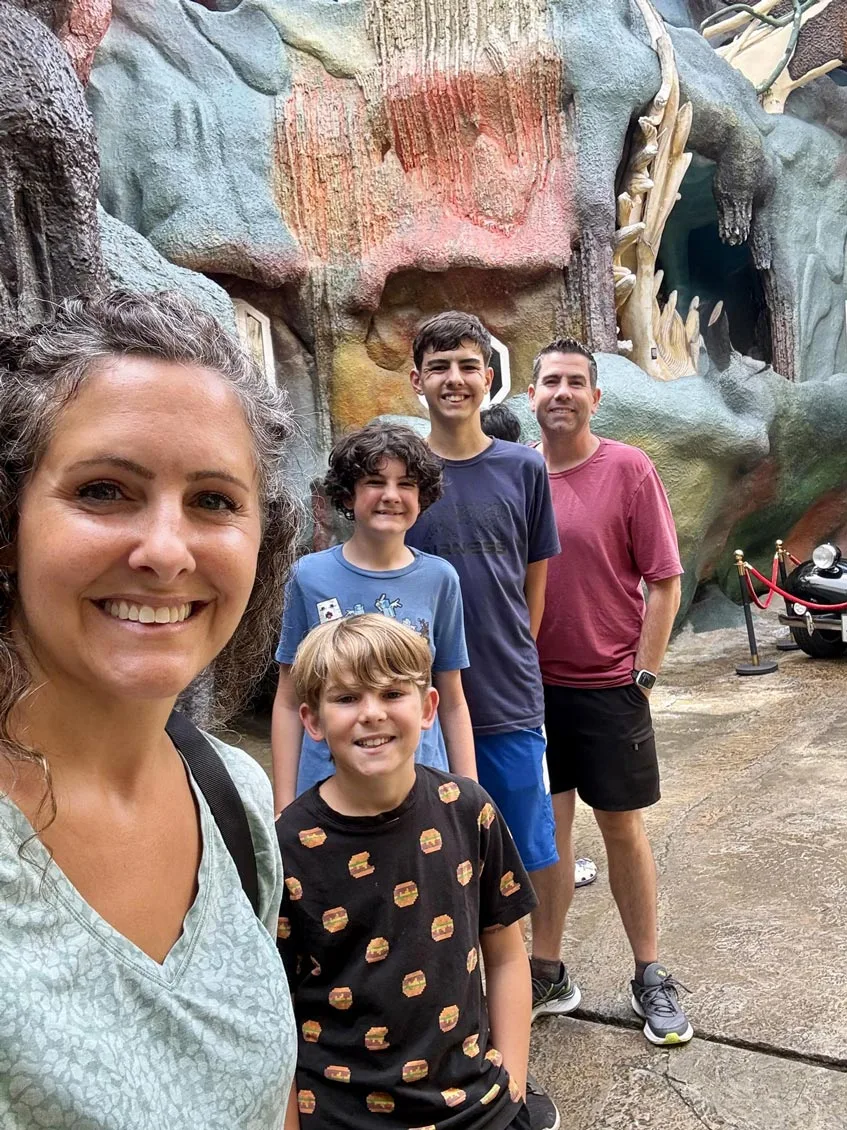
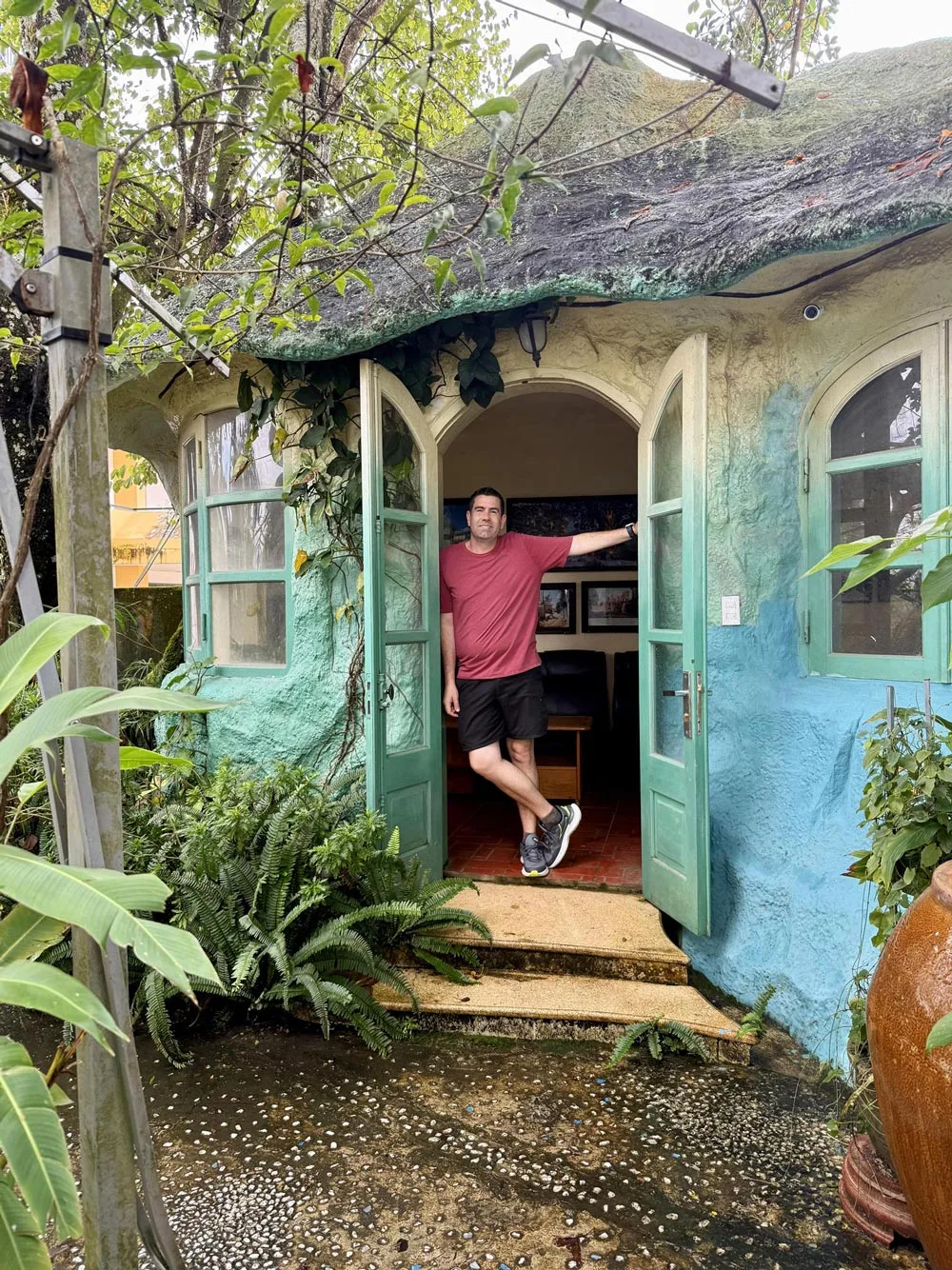
Our family Review of Crazy House, Dalat: 50 toes up!
Quick Overview of Crazy House Dalat:
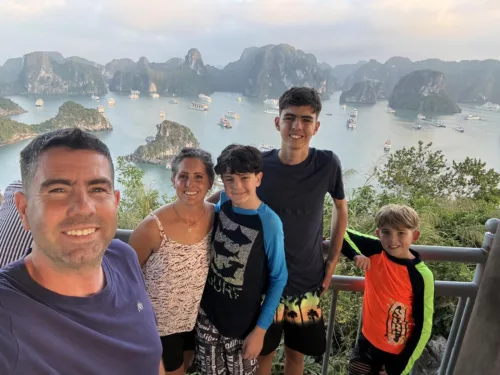
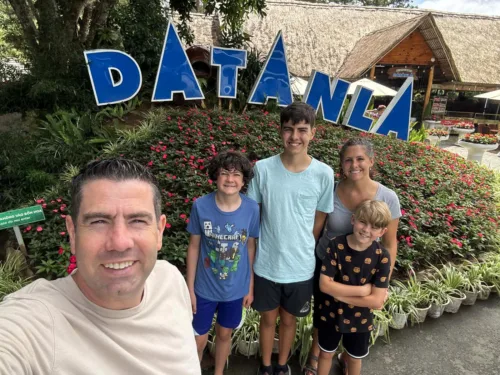
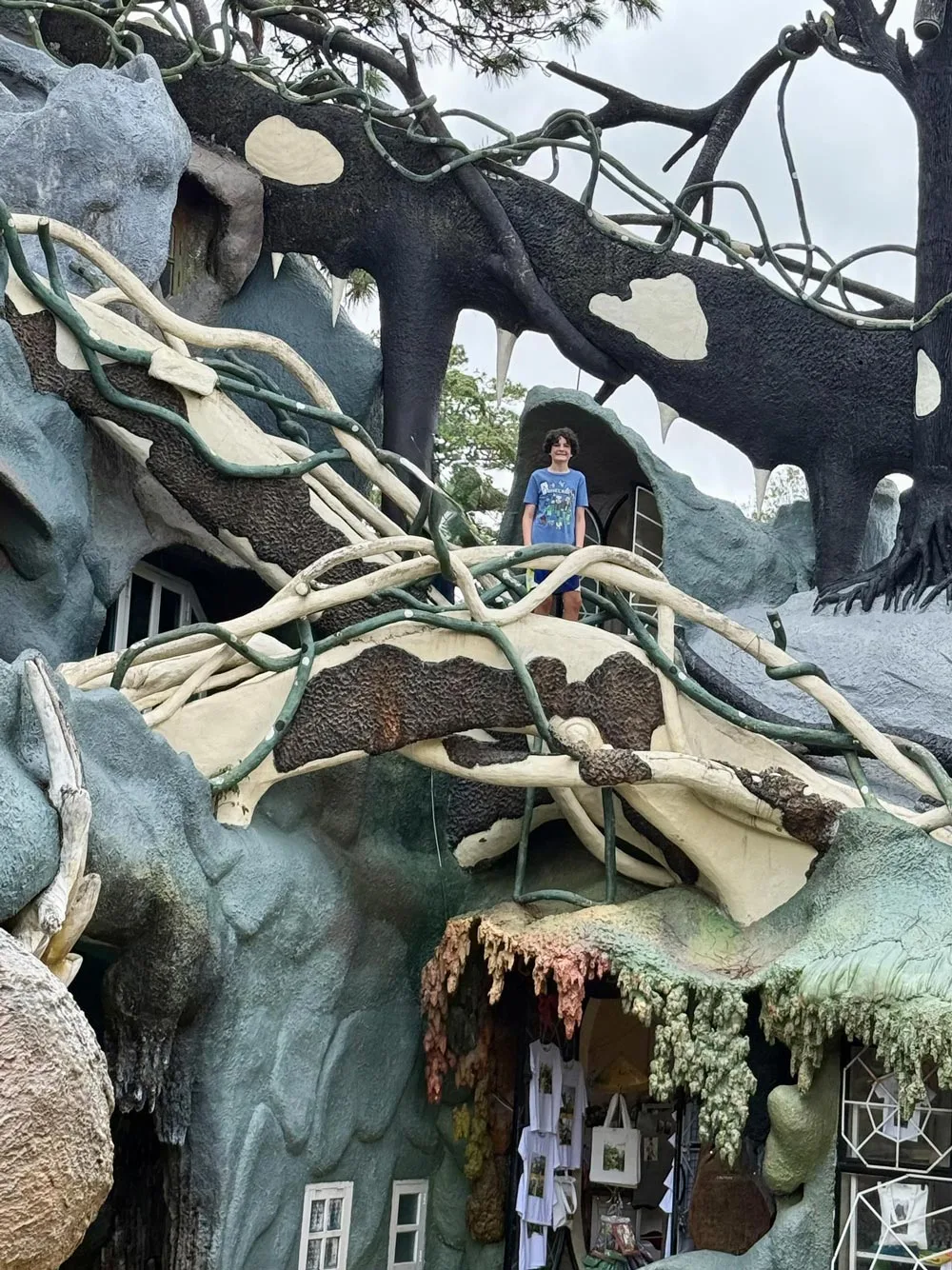
- Our boys (16, 14, and 11) loved the experience. They would go back in a heartbeat. We let our boys lead the way and explore. They decided to play ‘walking’ hide and seek… Celine was fine with that. I was a bit hesitant, given that safety standards here are not what we’re used to (like railing heights, or railings at all…). The boys were fine.
- The Crazy House features winding staircases, tunnels, and sky bridges that connect different sections of the building. Wear shoes with good tread.
- The construction of Crazy House began in 1990 and it is still an evolving project, with new additions and renovations ongoing. We’ll visit again.
- You can stay overnight in the Crazy House guest rooms (it’s centrally located, so easy to walk to restaurants and shops nearby) but keep in mind there’s no air conditioning.
- Admission to the Crazy House typically costs 80,000–100,000 VND ($3–$4 USD) per adult, and we suggest planning 1–2 hours for your visit or group with a tour with a few stops.
- Our boys equated it to something like Meow Wolf Santa Fe and most like St. Louis City Museum.
- Find the official Dalat Crazy House website here.
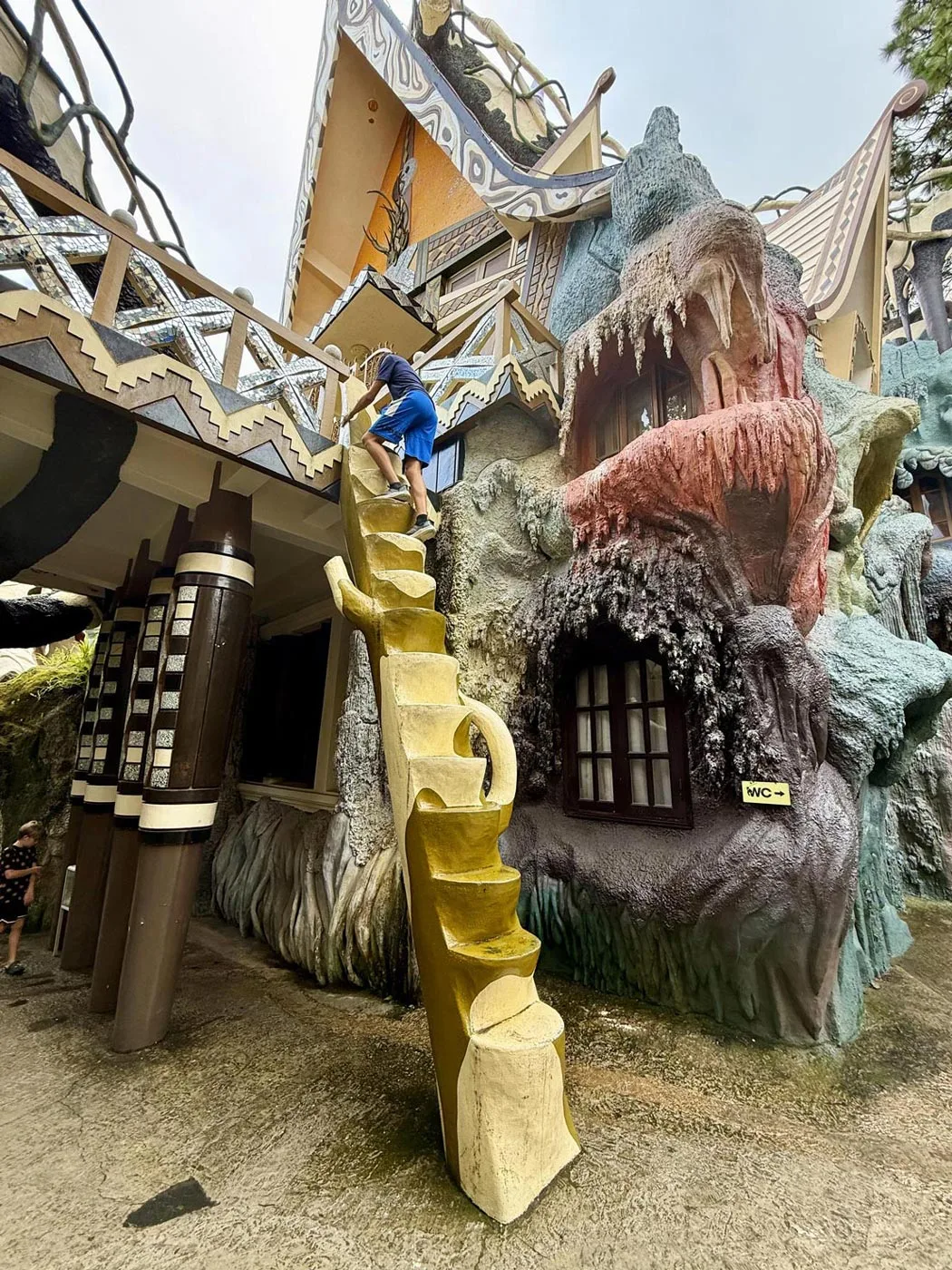
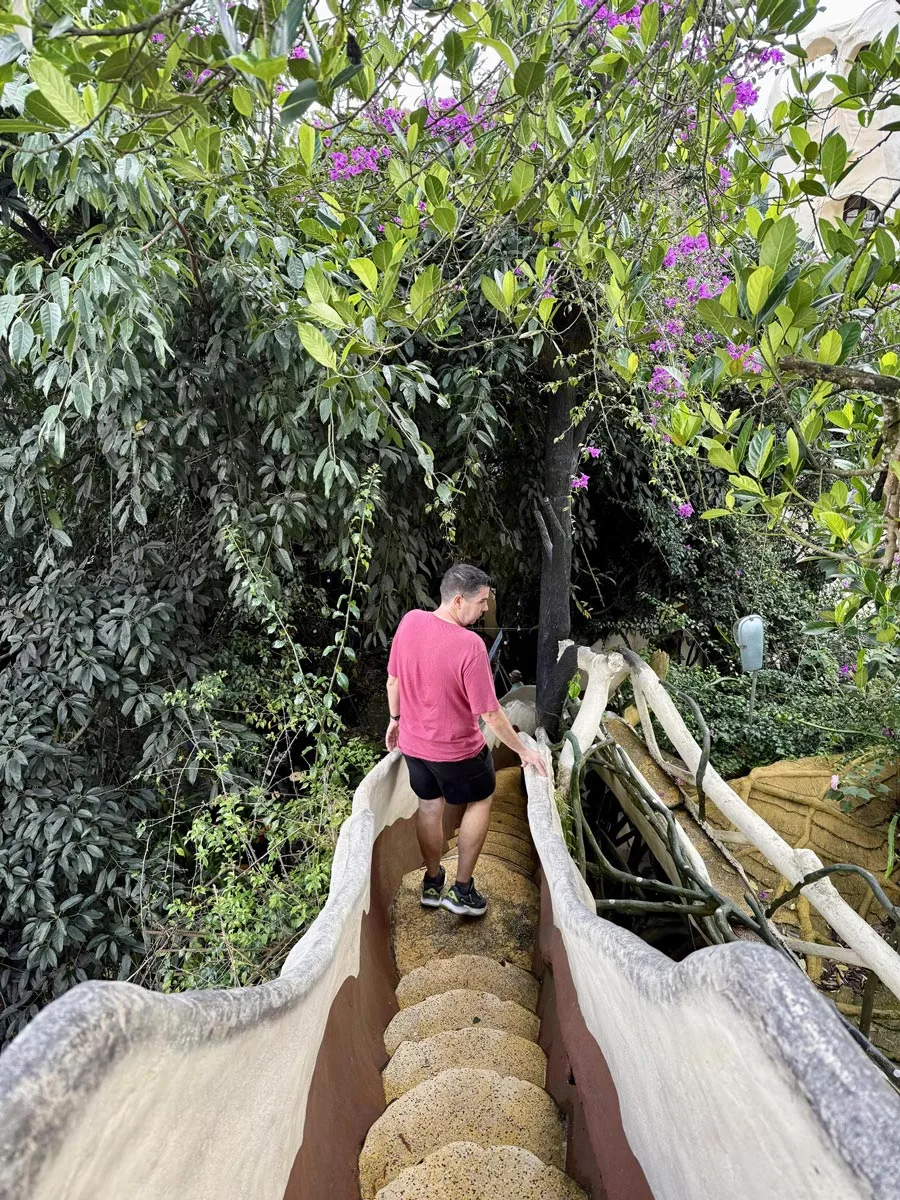
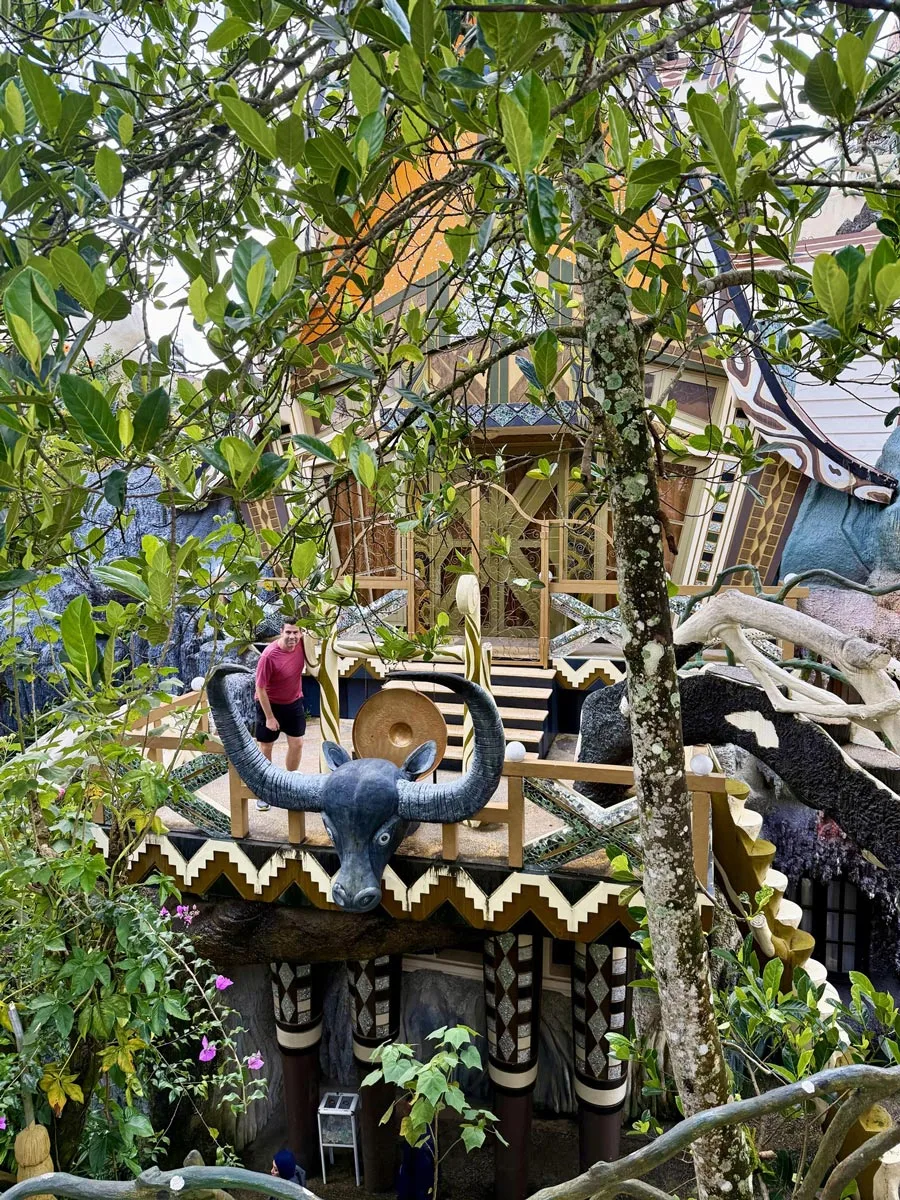
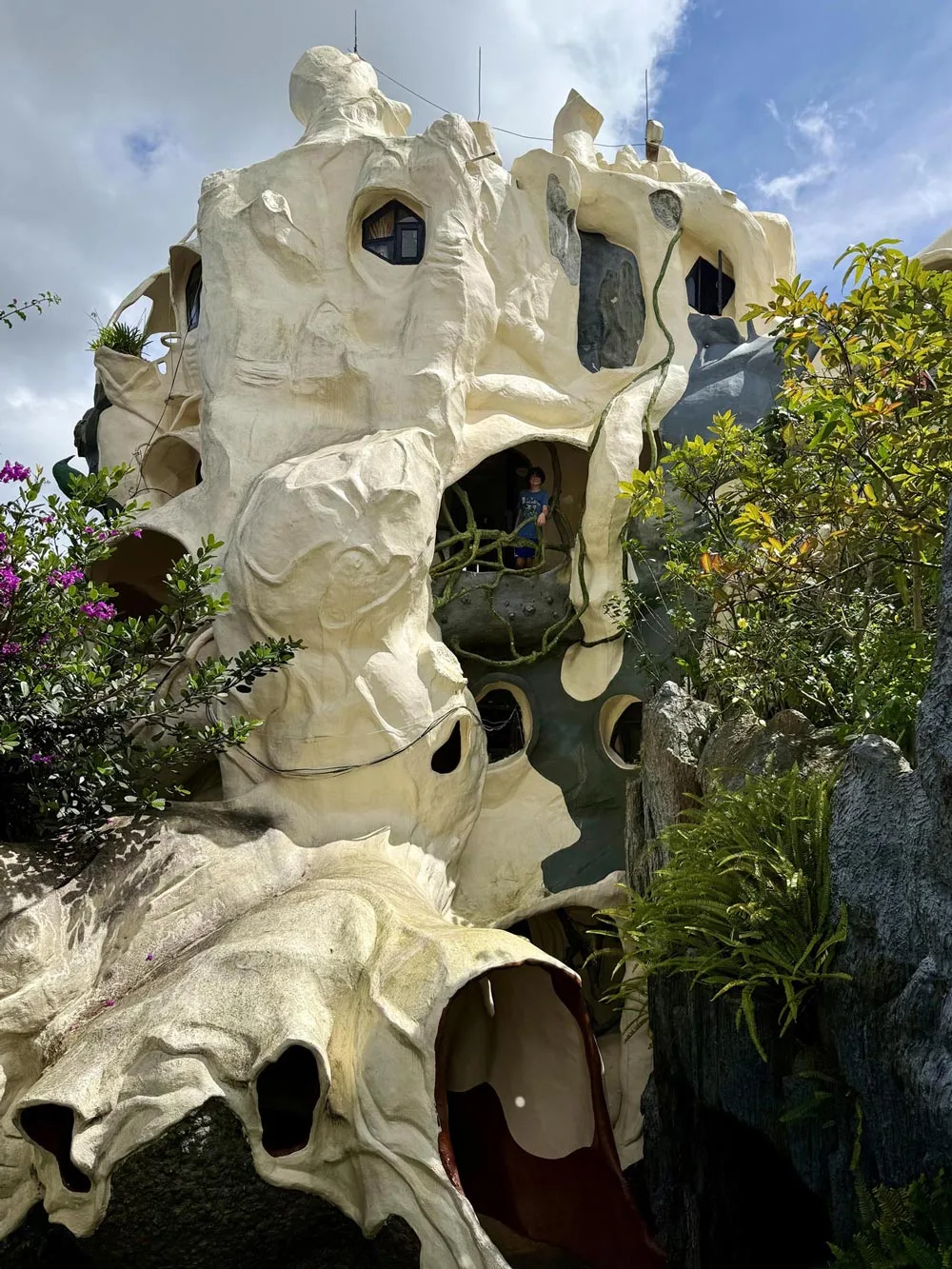
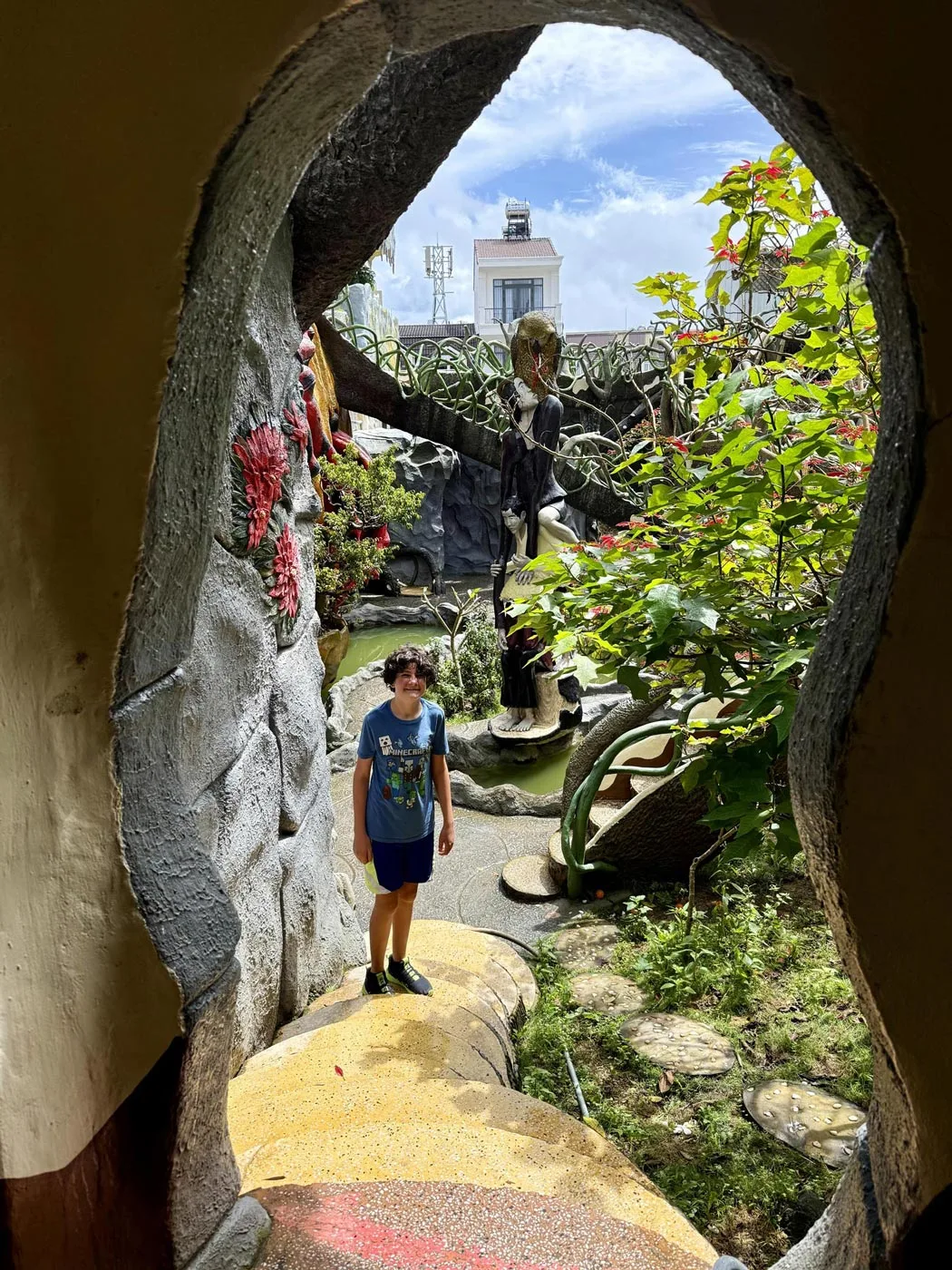
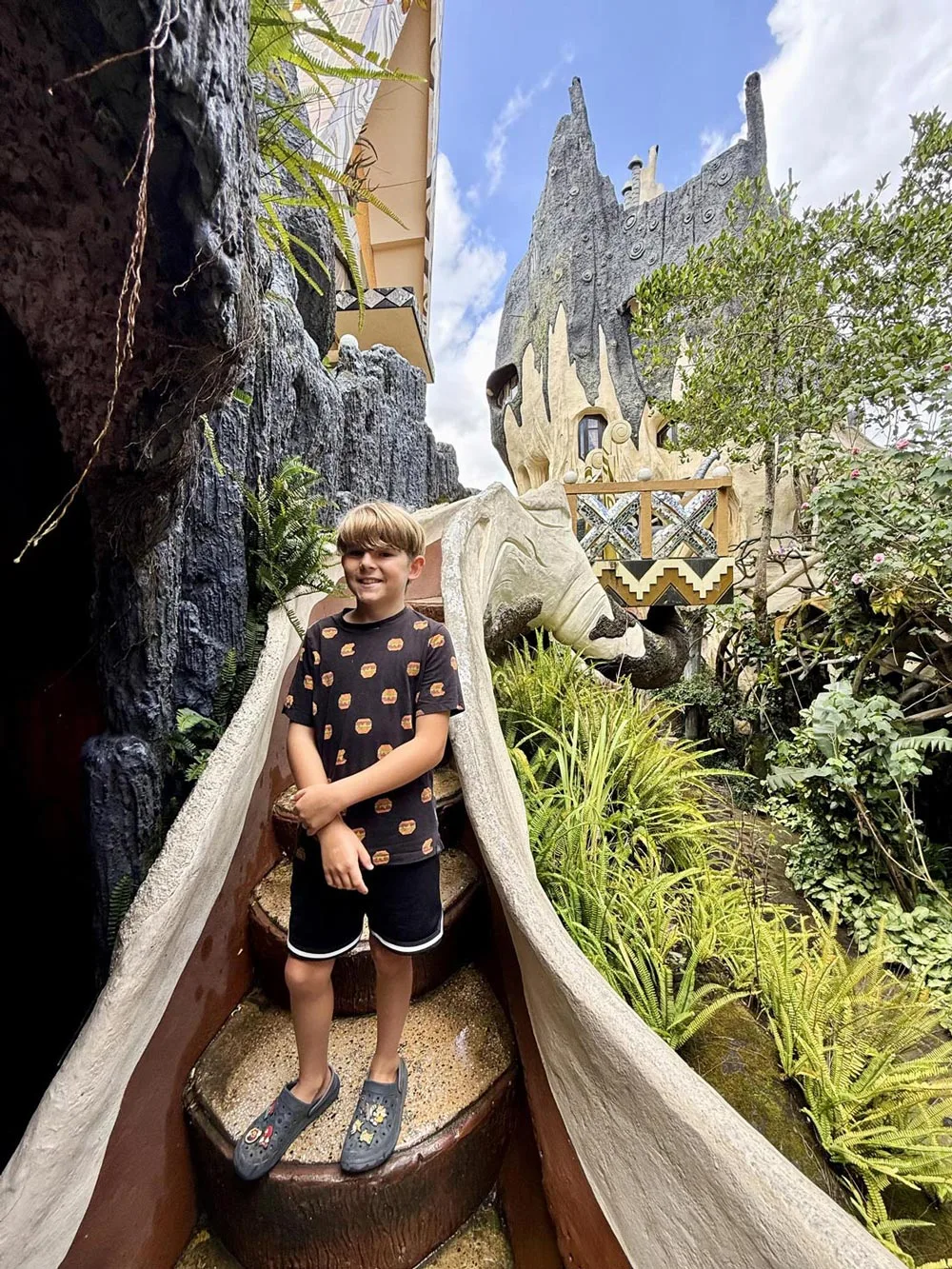
This is the part I mentioned: Small steps, steep, and no railing at Crazy House in Dalat
What is the Crazy House Dalat?
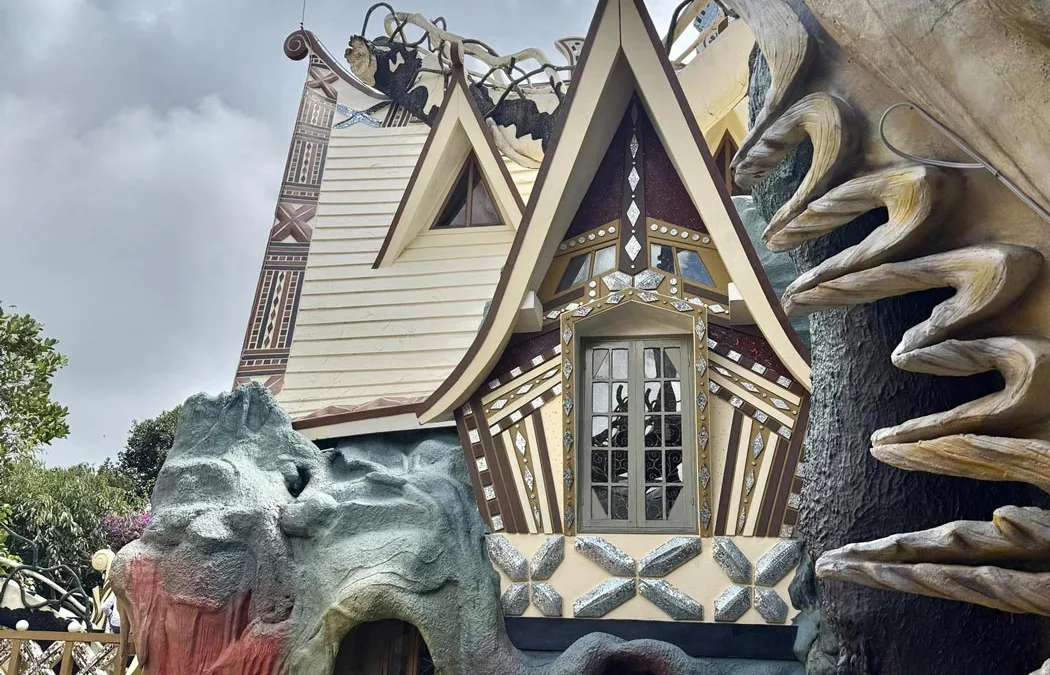
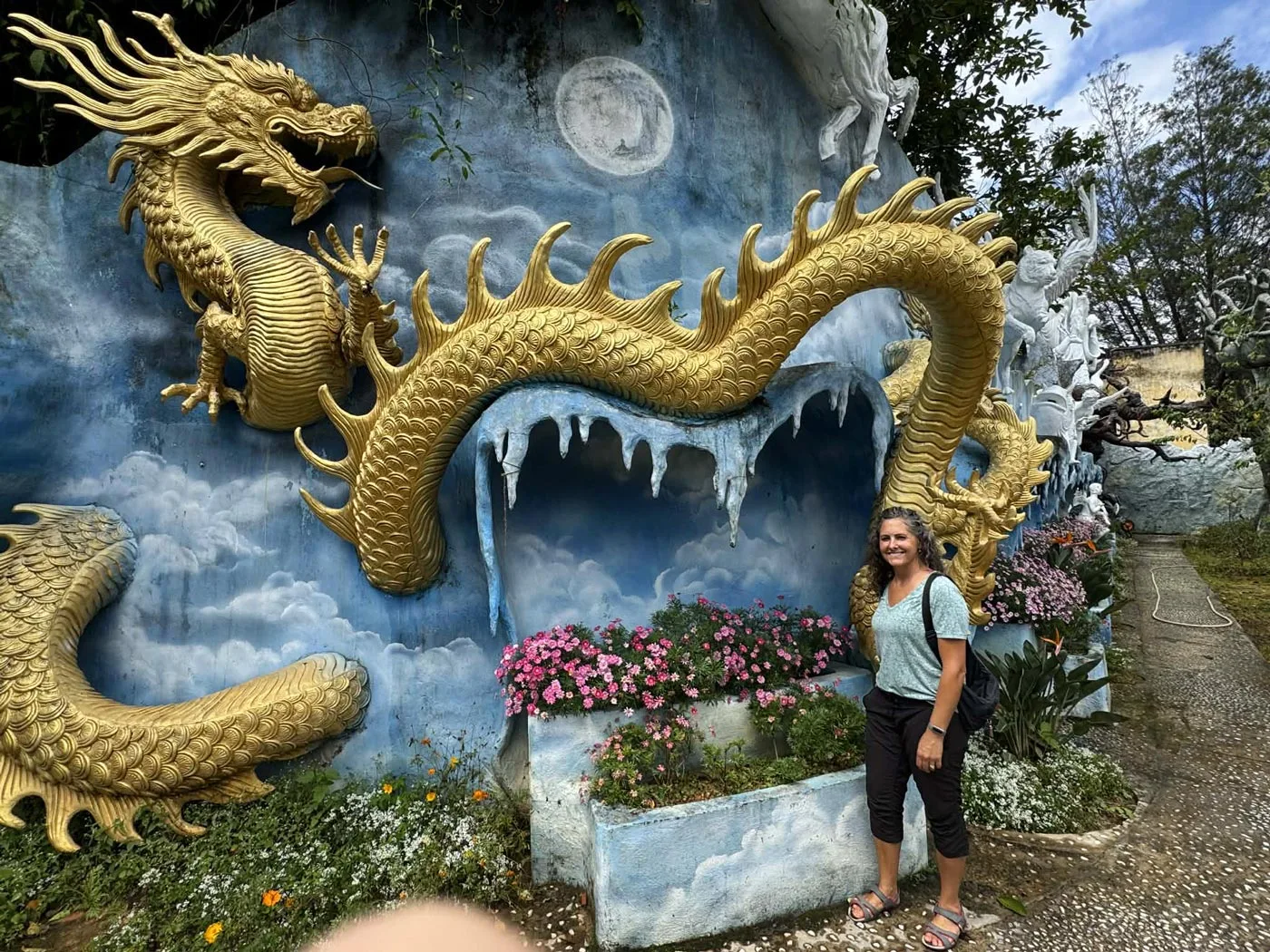
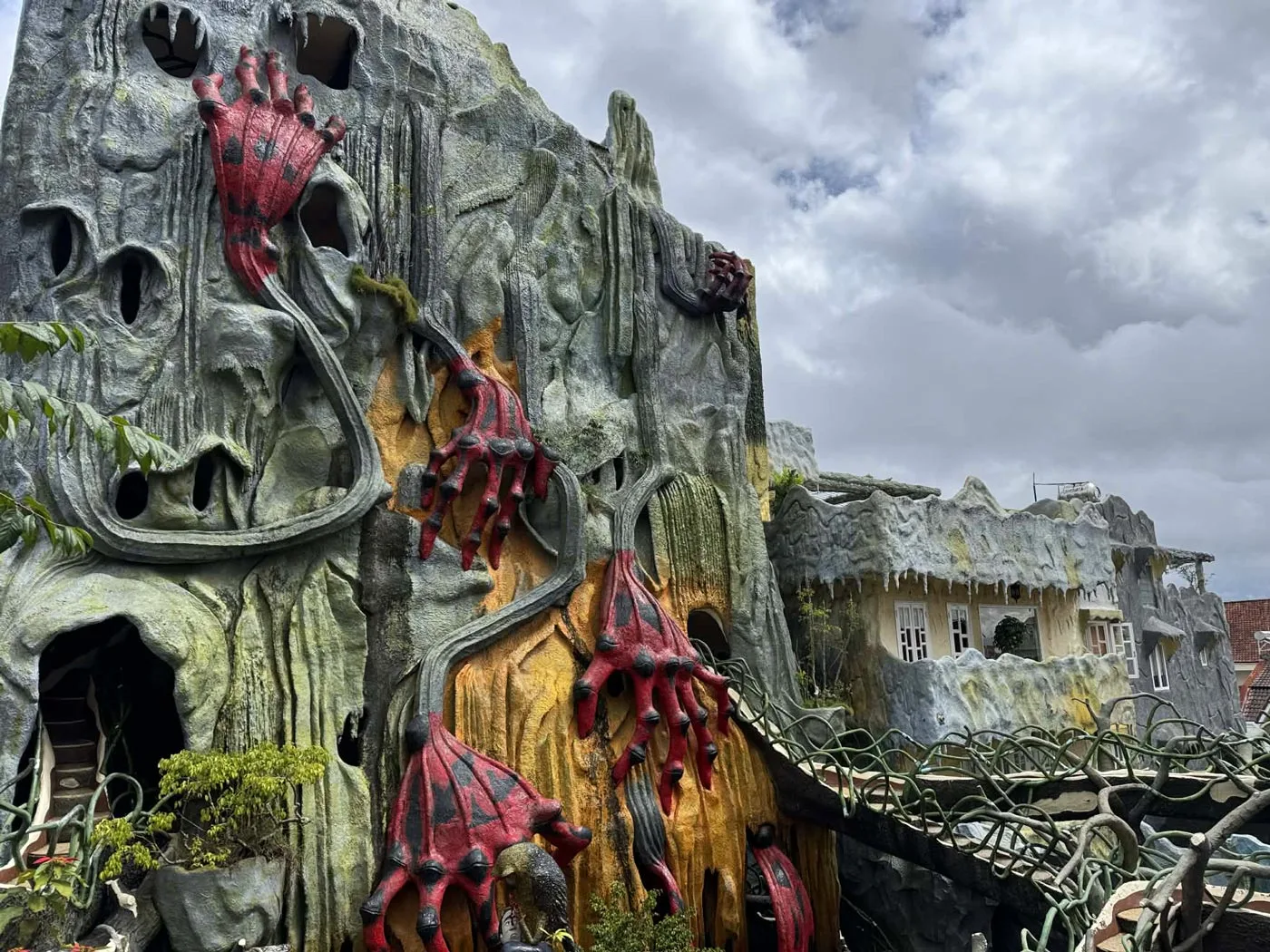
The crazy house, officially known as Hang Nga Guesthouse, represents Vietnam’s most unconventional architectural marvel that resembles a giant fairy tale tree emerging from the earth. This extraordinary structure challenges every principle of traditional design, comprising complex organic forms that mirror natural elements found in forests and caves.
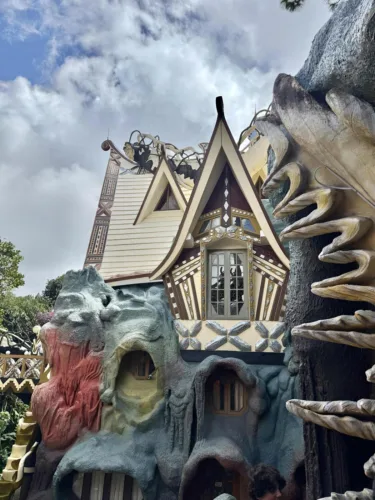
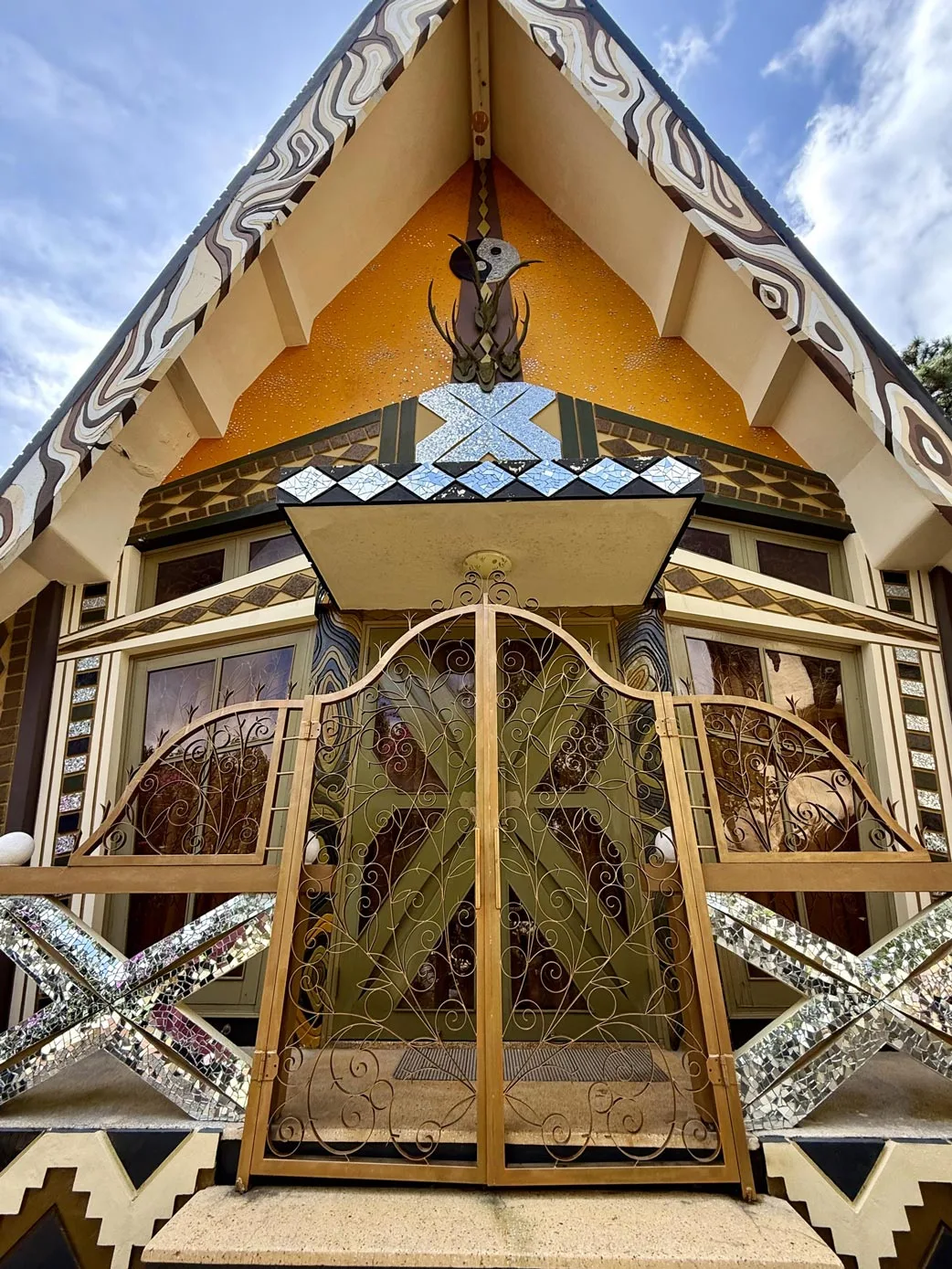
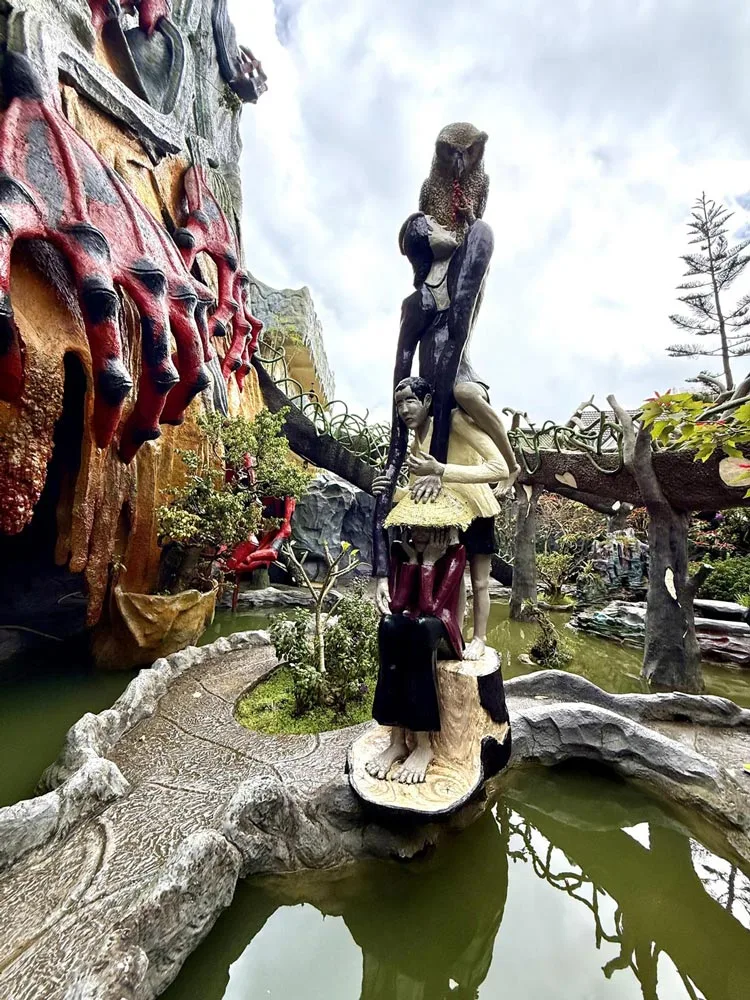
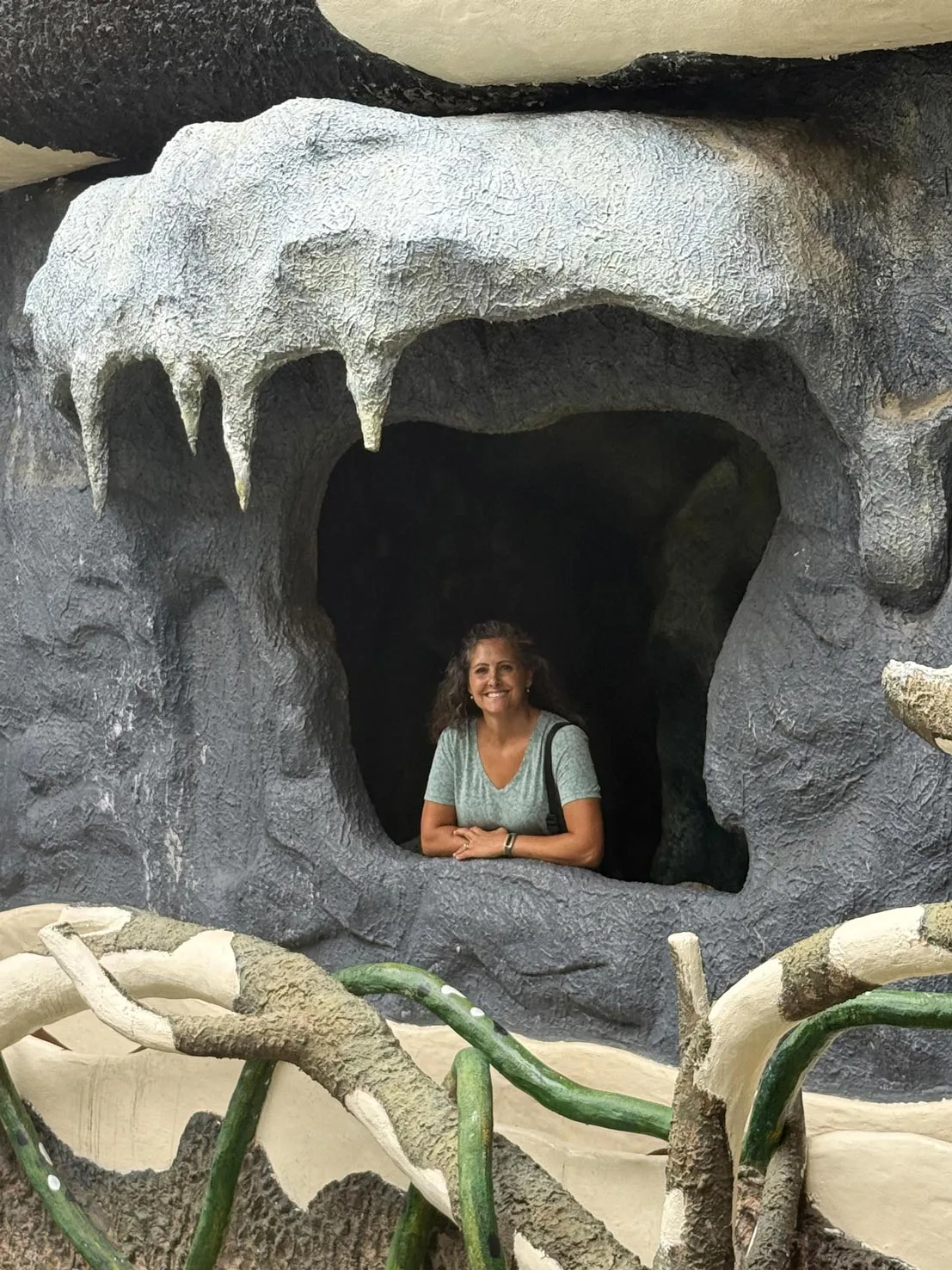
Designed by vietnamese architect Dang Viet Nga and opened to the public in 1990, the building showcases organic, non-rectilinear shapes inspired by mushrooms, spider webs, caves, and other natural elements. The design resembles a living organism rather than a constructed building, with flowing cement branches that twist and wind throughout the property like a maze of interconnected pathways.
The structure has gained recognition far beyond Vietnam’s borders, earning a spot among the world’s top 10 most bizarre buildings according to the Chinese People’s Daily. This international attention has resulted in features across numerous guidebooks, establishing the property as one of Southeast Asia’s most photographed architectural curiosities.
The nga guesthouse functions as both a tourist attraction and operating guesthouse with 10 uniquely themed rooms. Visitors can explore the winding corridors during the day or book overnight accommodation to fully immerse themselves in this surreal environment. Each guest room represents a different animal theme, creating spaces that feel more like natural caves than traditional hotel accommodations.
The building’s design philosophy centers on reconnecting people with nature through architecture. Every element, from the sculptured design elements to the organic shapes integrated throughout, serves to blur the boundaries between artificial construction and natural environment.
View this post on Instagram
The Architect Behind the Madness
Dang Viet Nga stands as the visionary force behind this architectural phenomenon. Holding a PhD in architecture and trained in Eastern Europe, Nga moved to Dalat in 1983 with her young son, seeking creative freedom after years of working on restrictive state-owned developments that offered minimal artistic expression.
In February 1990, rather than creating traditional architectural blueprints, Nga developed a series of paintings to communicate her fantastical vision for the structure. This unconventional approach to architectural planning distinguished her methodology from standard practices and required hiring non-professional local craftsmen who could translate these artistic visions into structural elements.
Nga’s fundamental motivation stemmed from environmental concerns that had developed over the last century. She articulated that people had destroyed nature not just in Vietnam but around the world, and she wanted to create a structure that would bring visitors closer to nature and inspire them to preserve it. Her architecture serves as a voice leading people back to natural forms rather than exploiting and destroying the environment.
The construction process involved steel, wood, and concrete materials, with concrete chosen specifically for its affordability and malleability, allowing Nga to create whatever shapes she envisioned. Her rule-free architectural vision rejected classical principles based on straight lines and square planes, instead embracing curves, organic forms, and natural flow.
Nga continues to expand and evolve the structure with new additions and gardens, treating the building as a living entity that grows and changes over time. She describes the work as never truly finished, explaining that the crazy house feels like a living thing that is always changing and evolving.
The architect has acknowledged inspiration from Antoni Gaudí’s organic architecture while developing her own unique interpretation of environmental design. Her vision extends beyond mere construction to create an experience that reconnects visitors with natural elements and encourages environmental consciousness.
Architectural Design and Features
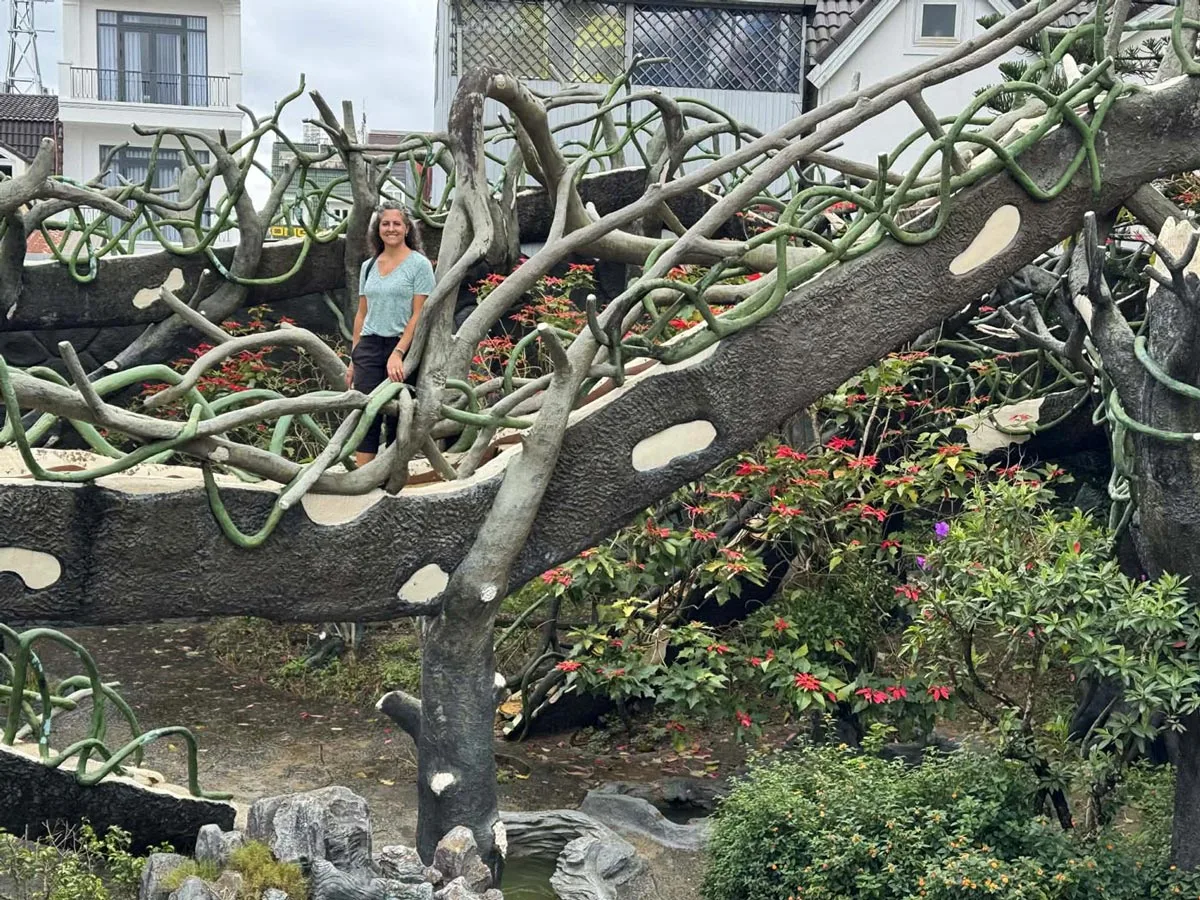
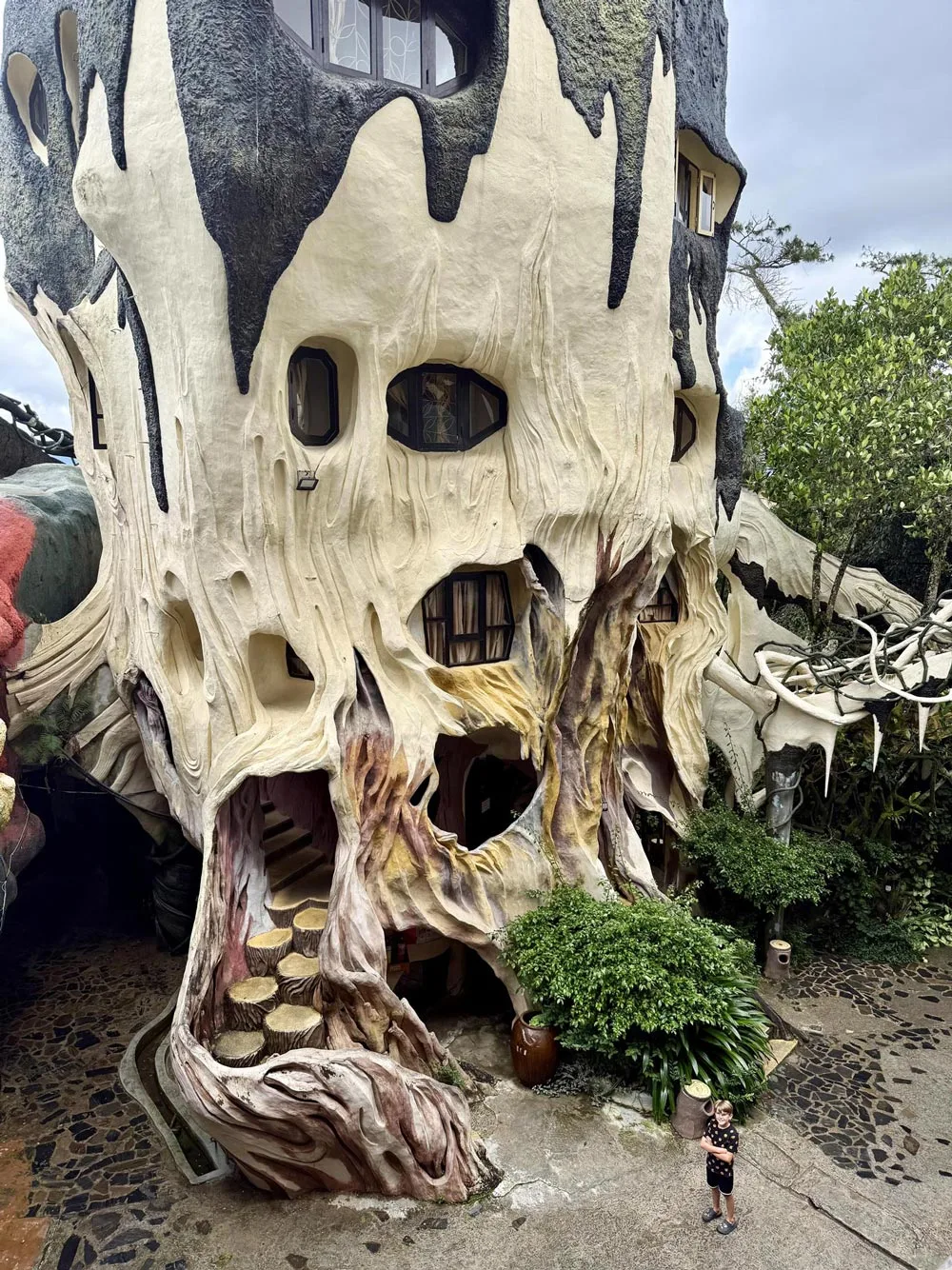
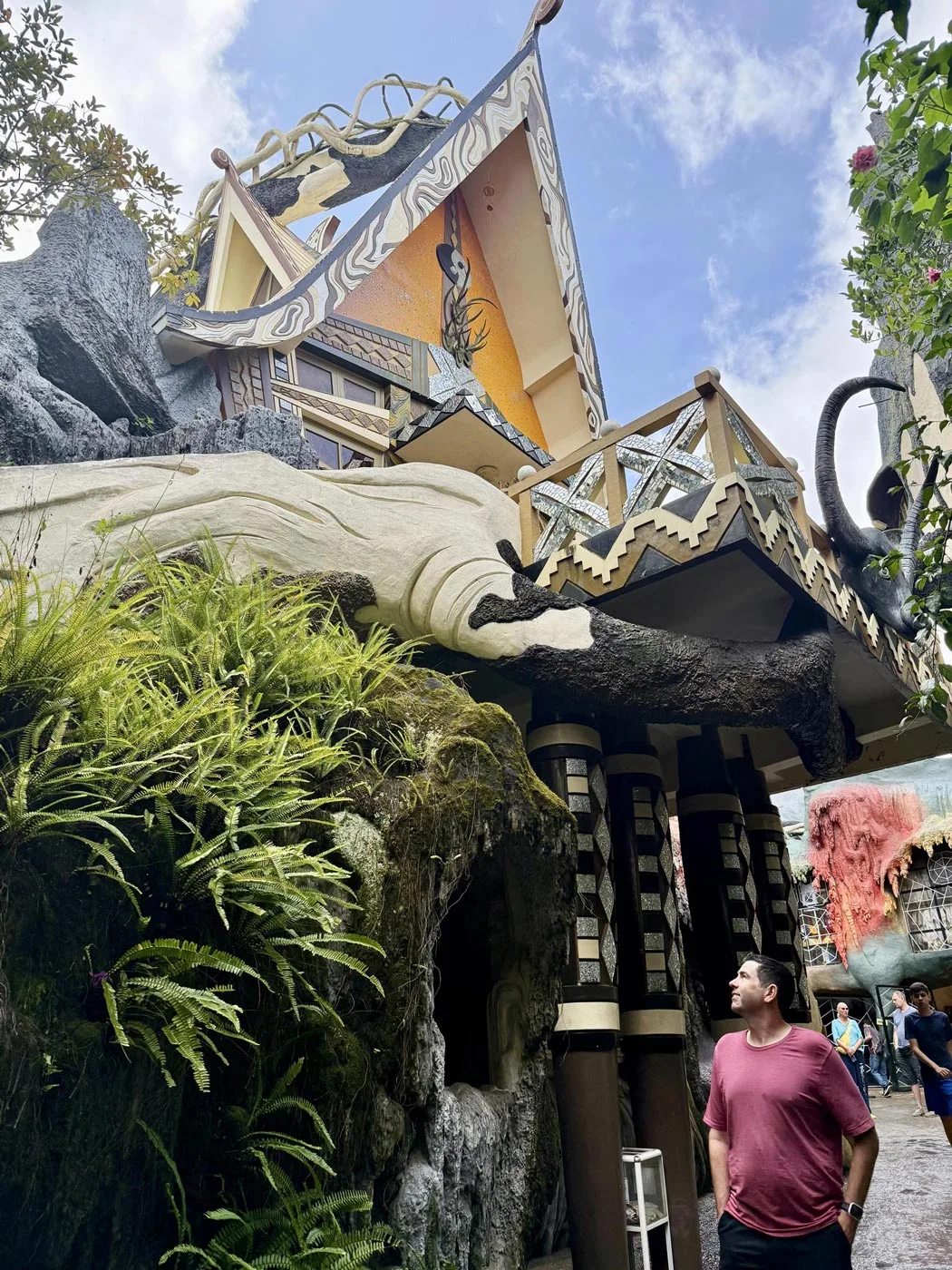
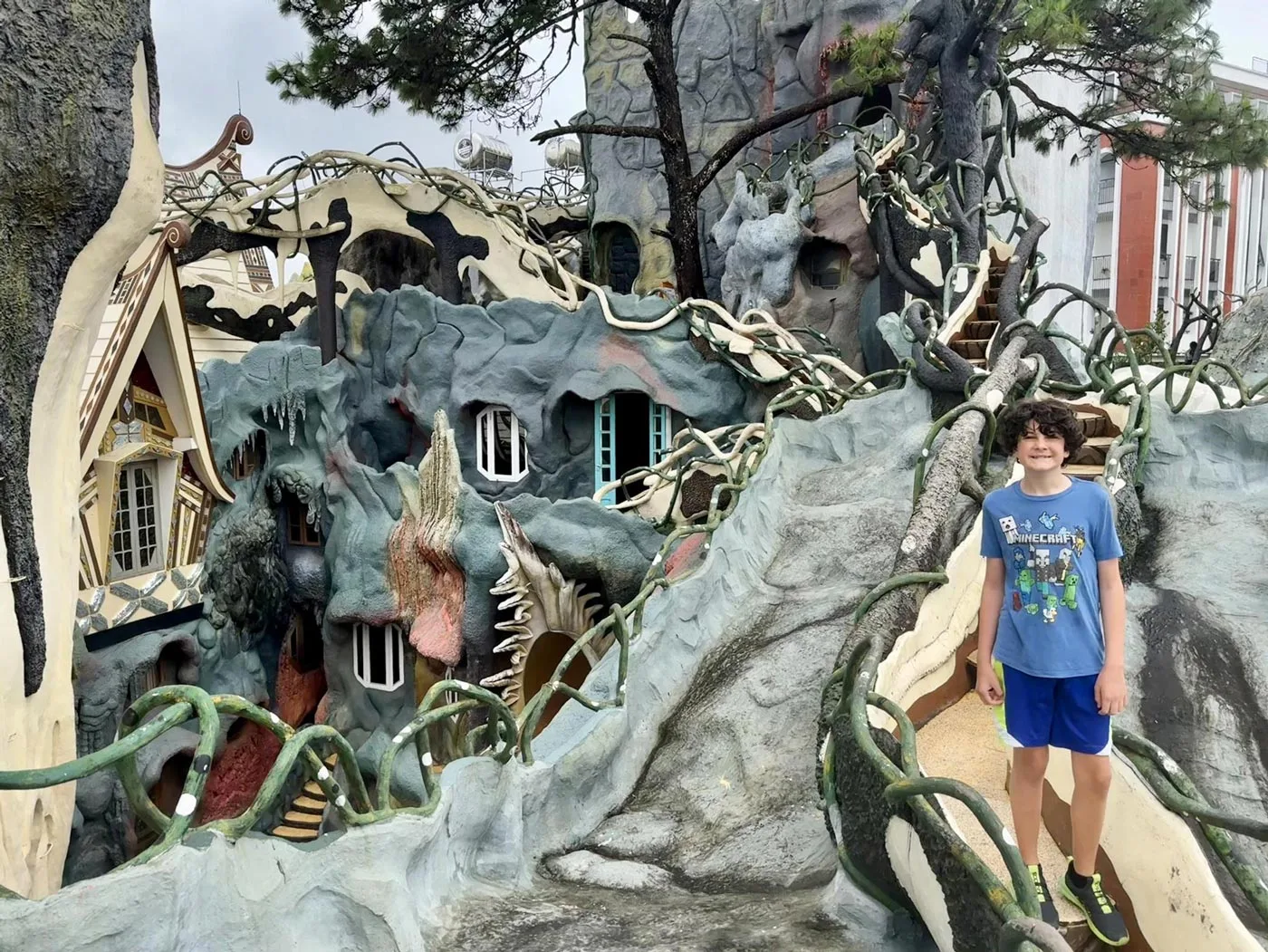
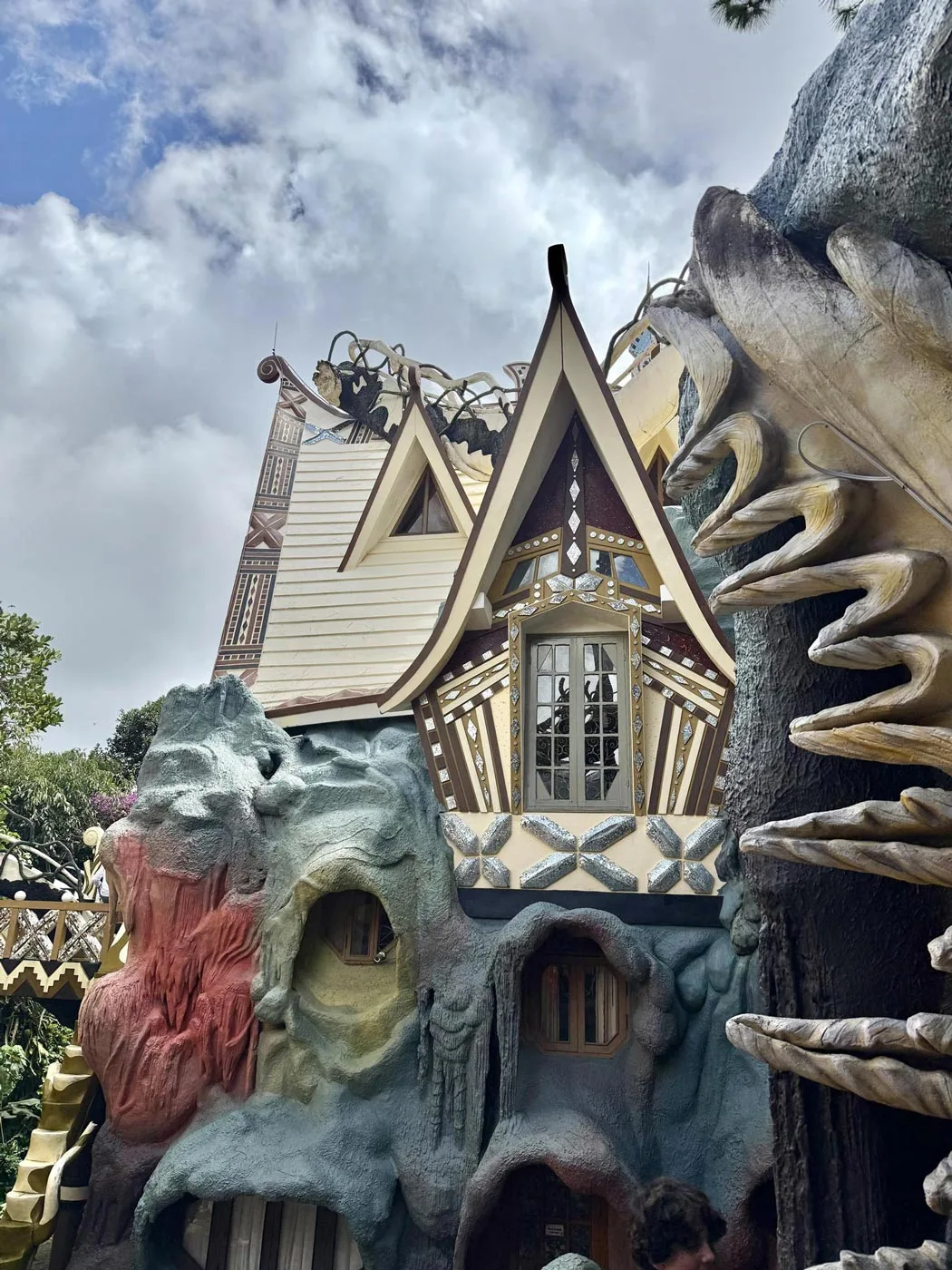
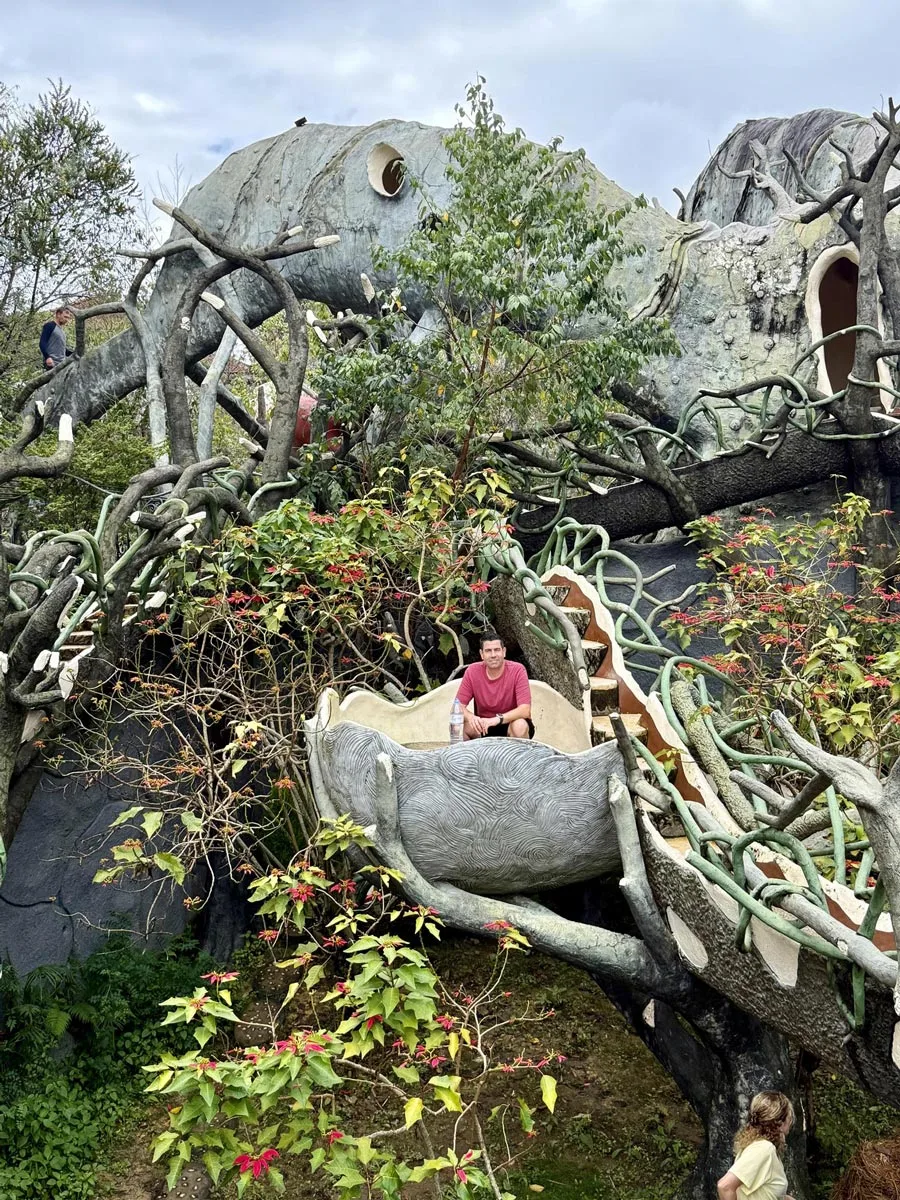
The main structure resembles a massive tree with cement “branches” connecting different areas throughout the property. The building’s exterior resembles a five-story-high banyan tree, with unevenly shaped window openings and branch-like structures that appear to grow along its walls and rise above the roof into the sky.
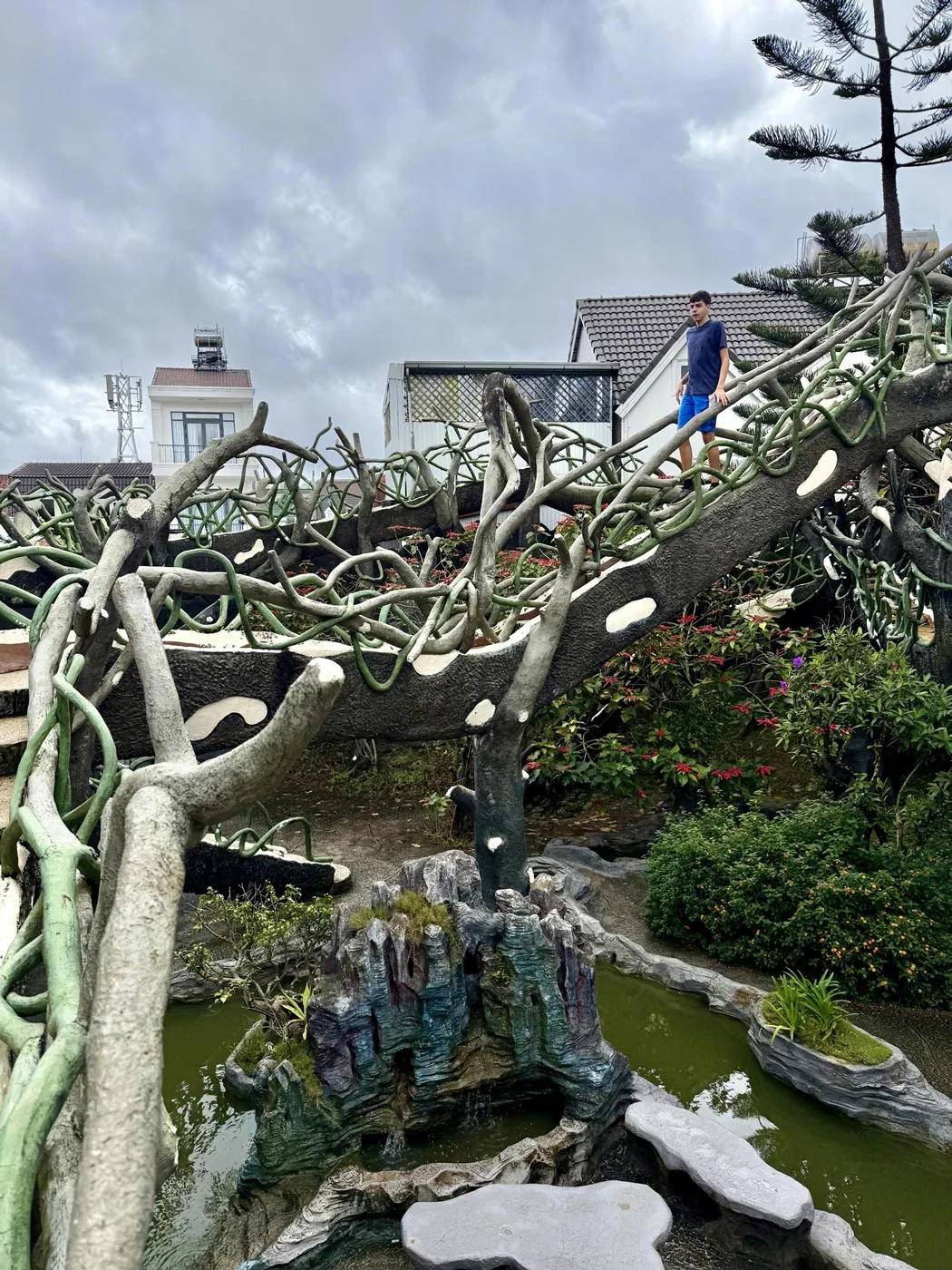
The design includes an elevated main house positioned in the center of an open courtyard, surrounded by four enormous tree houses linked by winding bridges. These sinuous cement branches serve dual purposes, functioning as structural elements and transportation routes that twist and wind between various sections, enabling movement from one area to another.
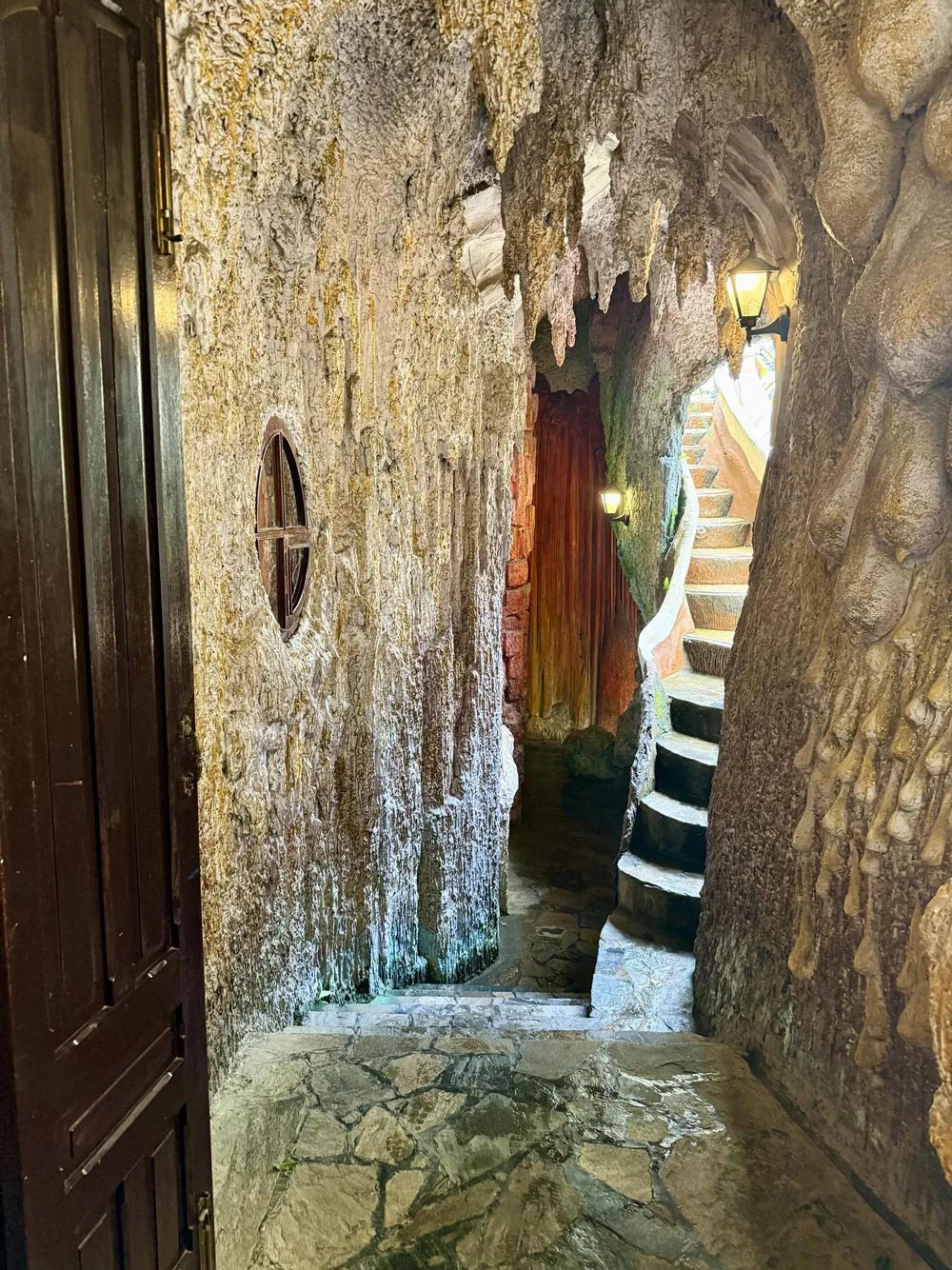
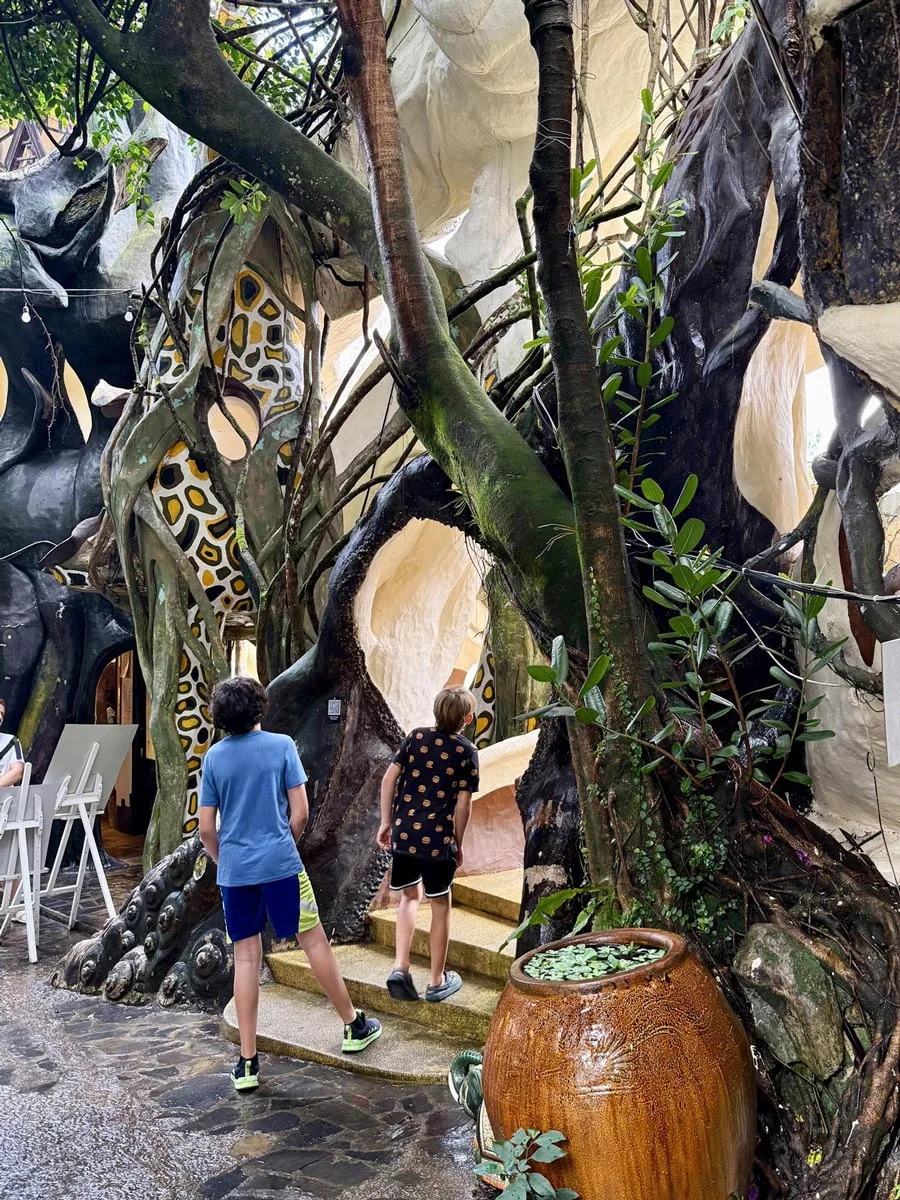
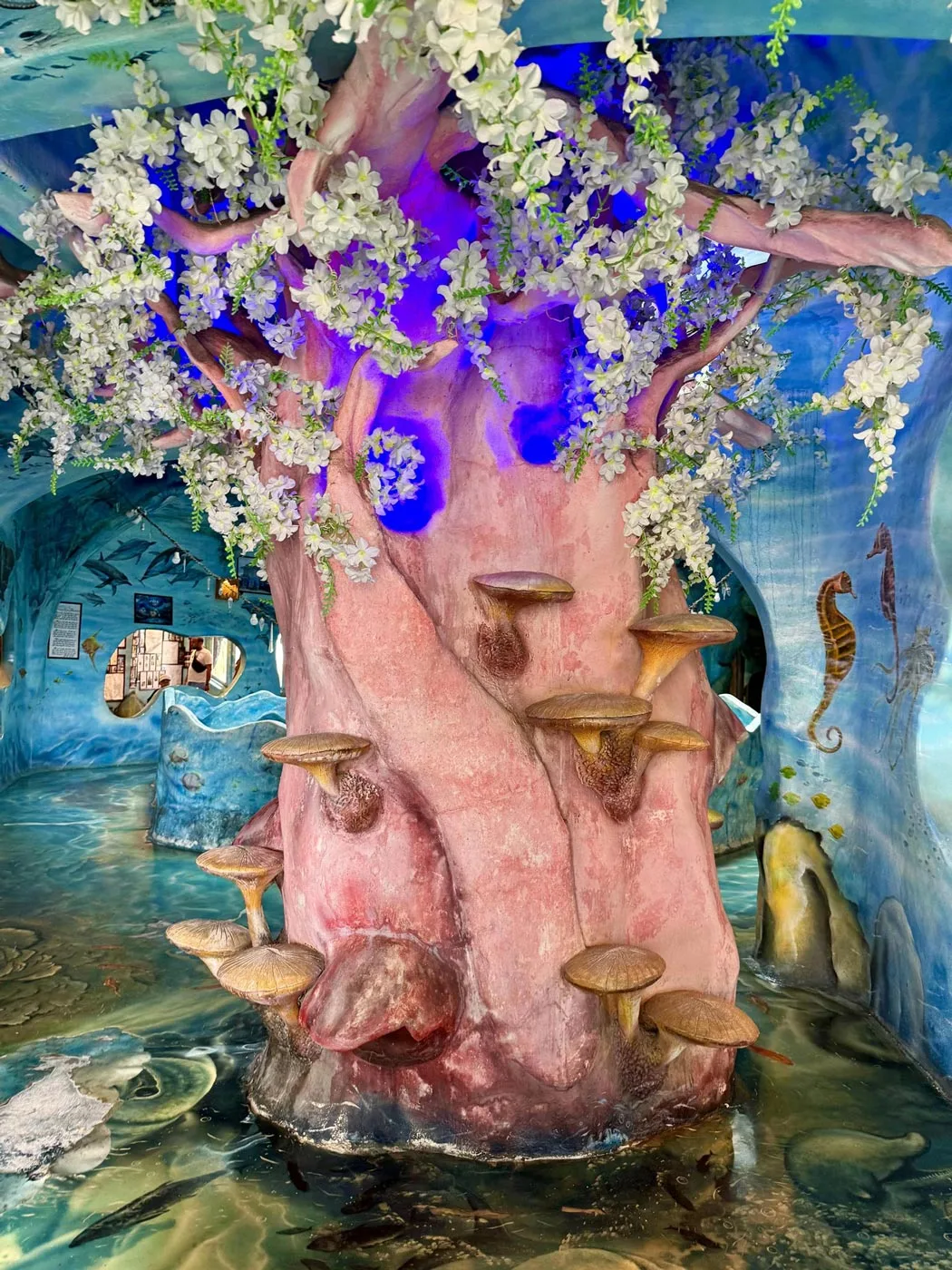
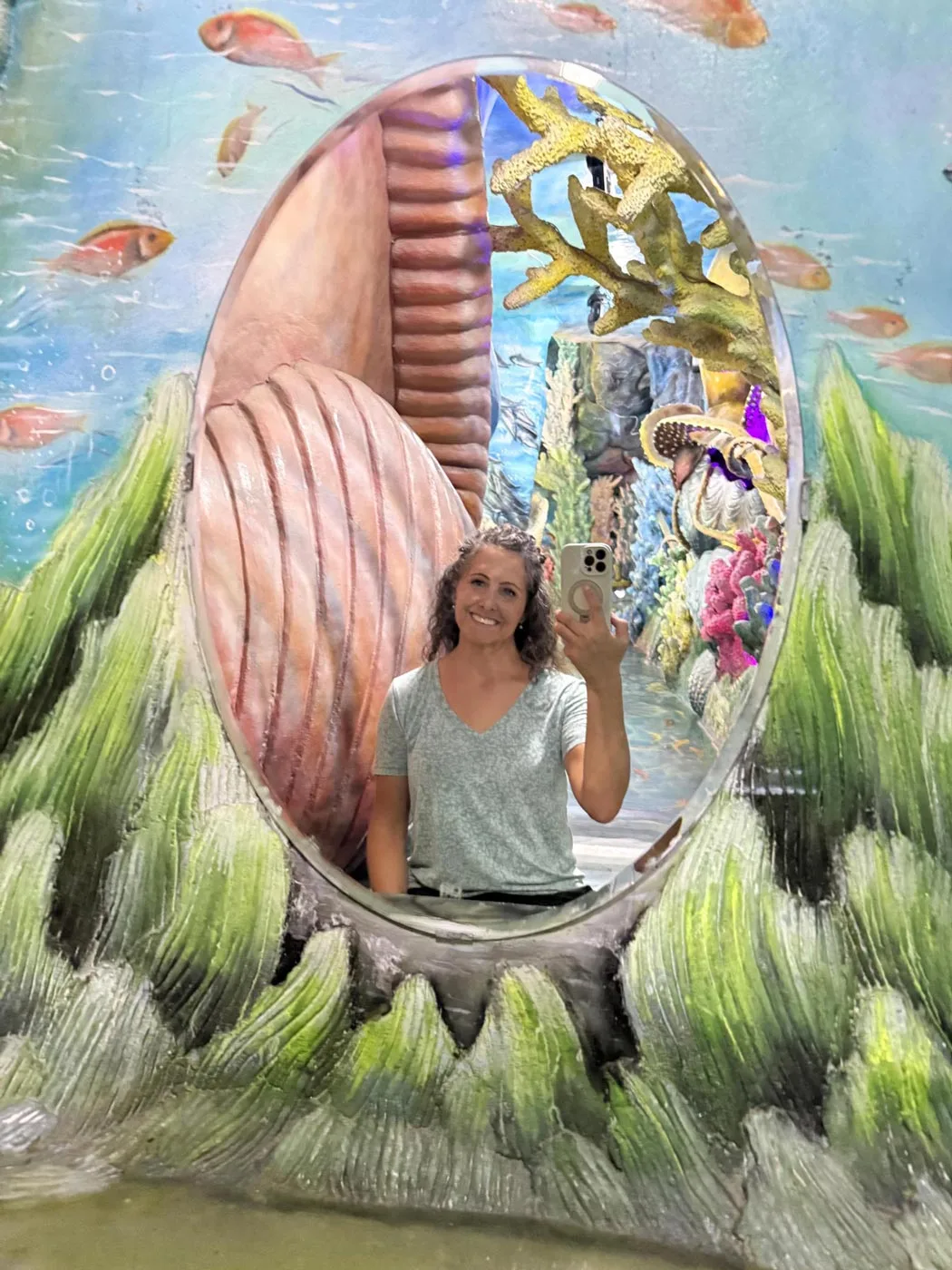
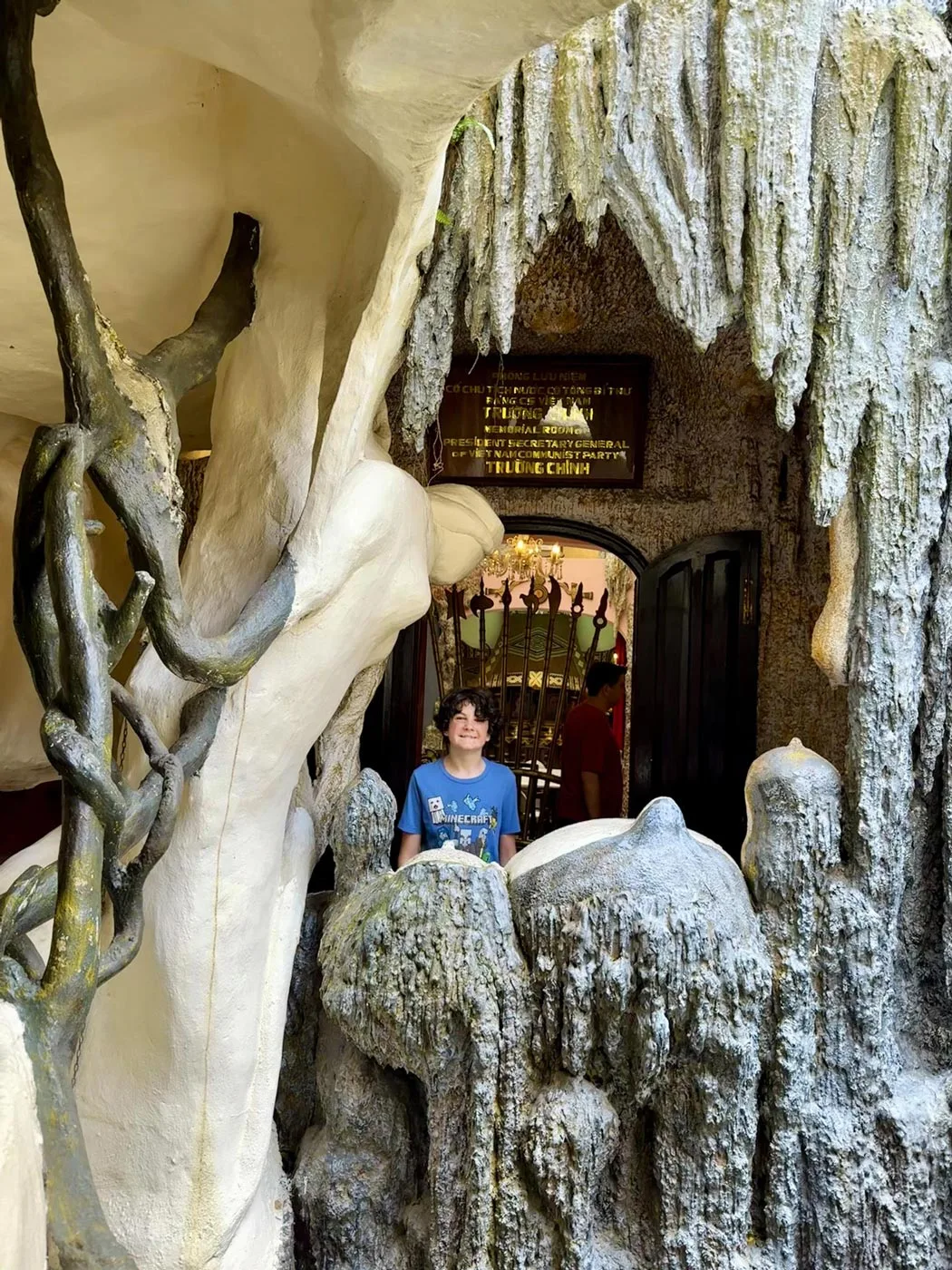
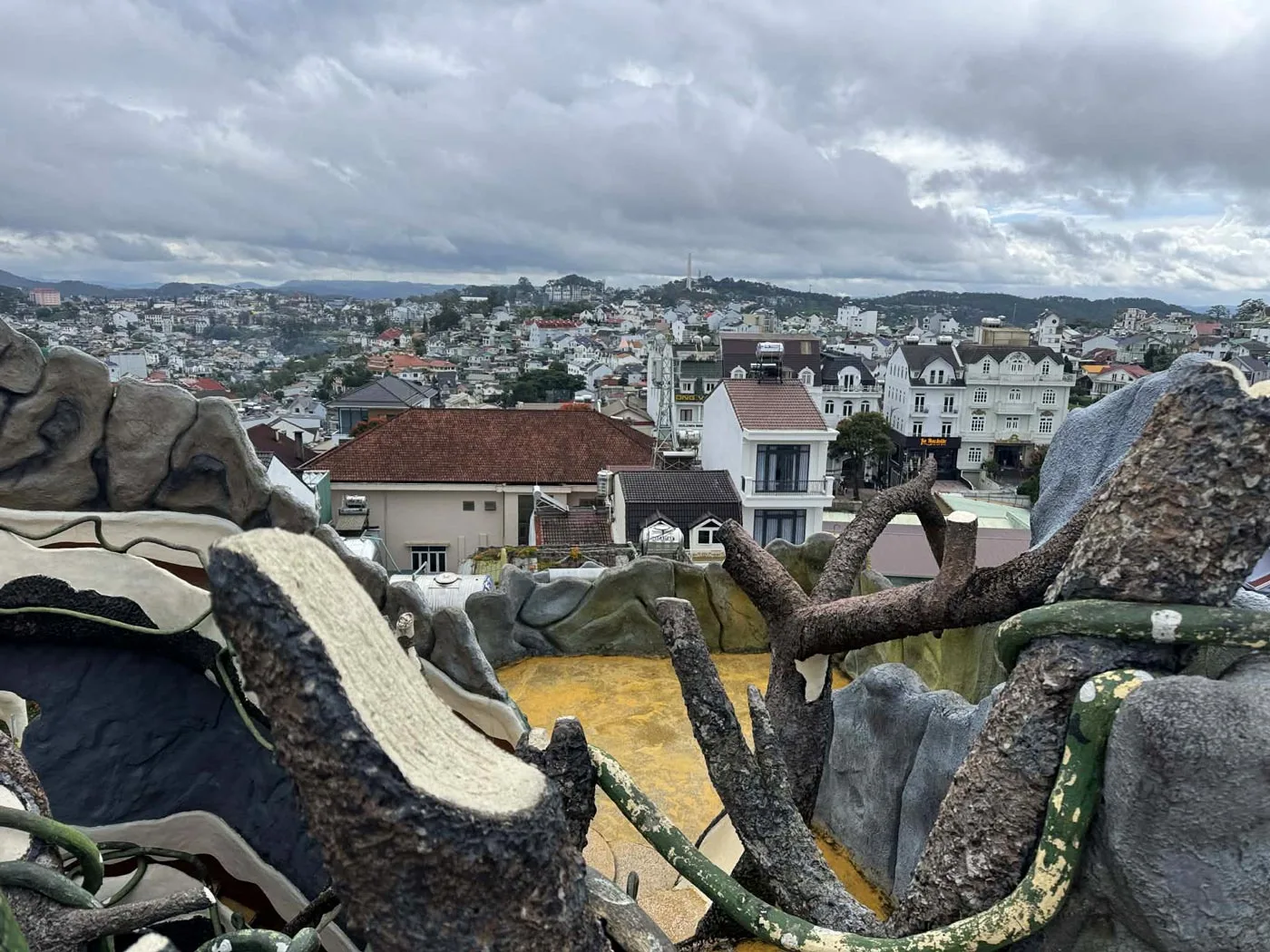
Visitors experience the interior as a journey through giant tree trunks with small winding paths that lead in unpredictable directions. The tree trunks connect via branches that take guests either toward the sky garden at the top of the crazy house or down to lower rooms featuring three-dimensional paintings of sea creatures and underwater scenes.
The structure features spiral staircases that wind organically through the building, sculptural bedrooms carved into tree-like forms, bright colors throughout, and hidden nooks that create surprise discoveries around every corner. The overall spatial arrangement incorporates spaces open on four sides to create richness of environmental visibility and natural light.
The experience is something between stepping into a Salvador Dalí painting brought to life by Walt Disney’s fantasy designs.
The building reaches a height of five stories and contains virtually no right angles throughout its construction. Instead, organic forms deliberately mirror natural elements, creating an environment where visitors feel they are exploring a living forest rather than a traditional building. Every surface, pathway, and room showcases the commitment to natural forms and environmental harmony.
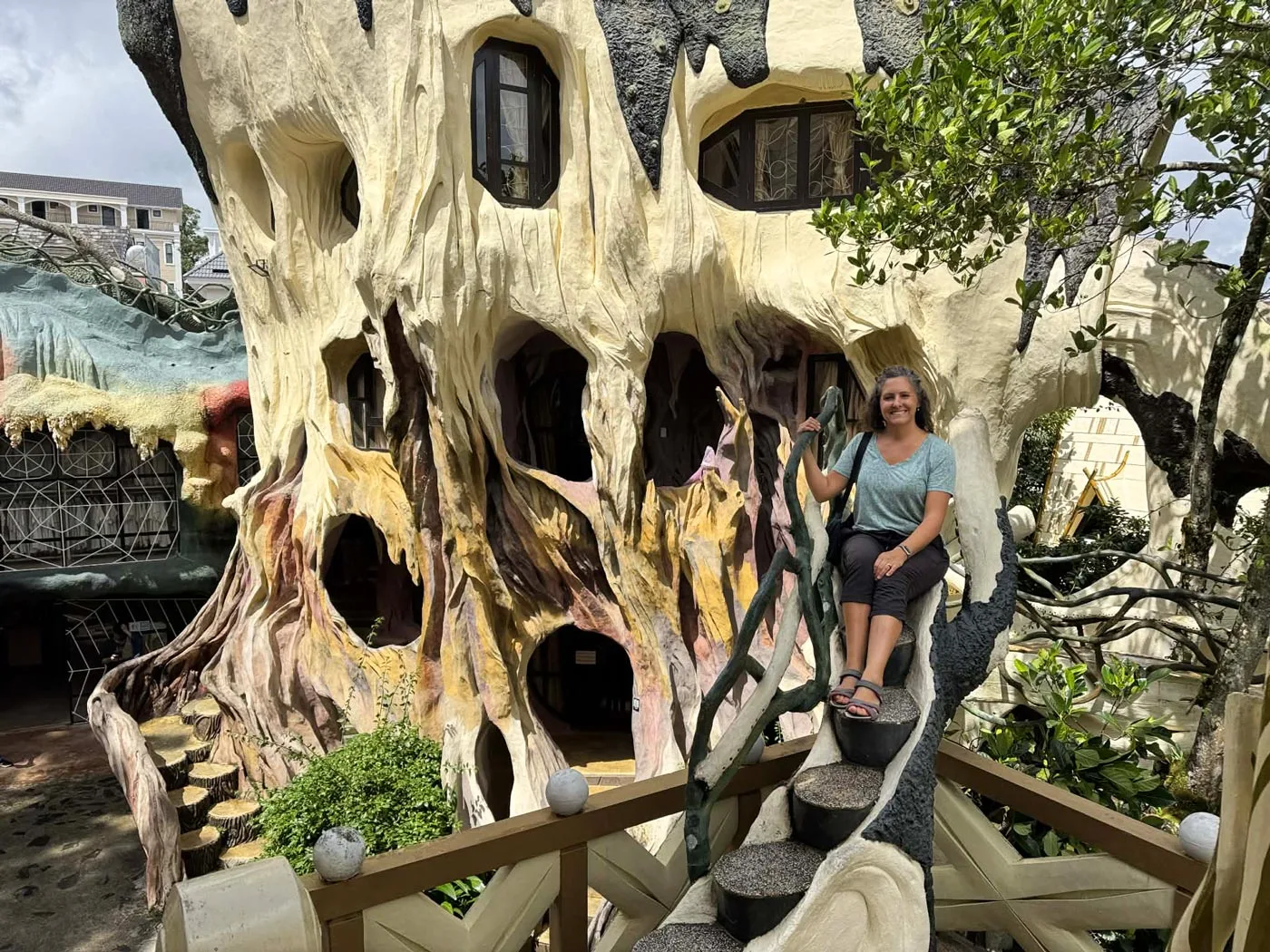
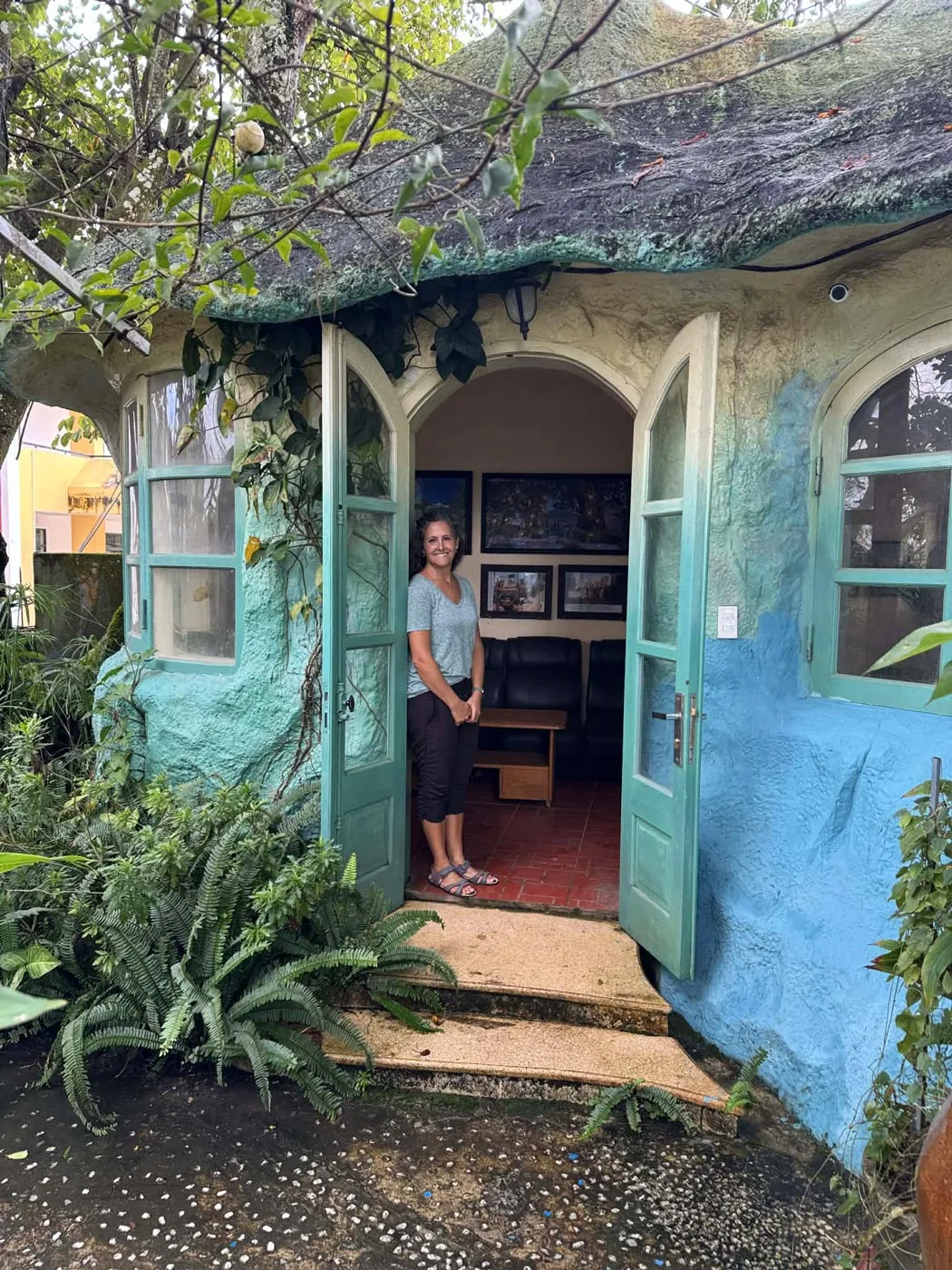
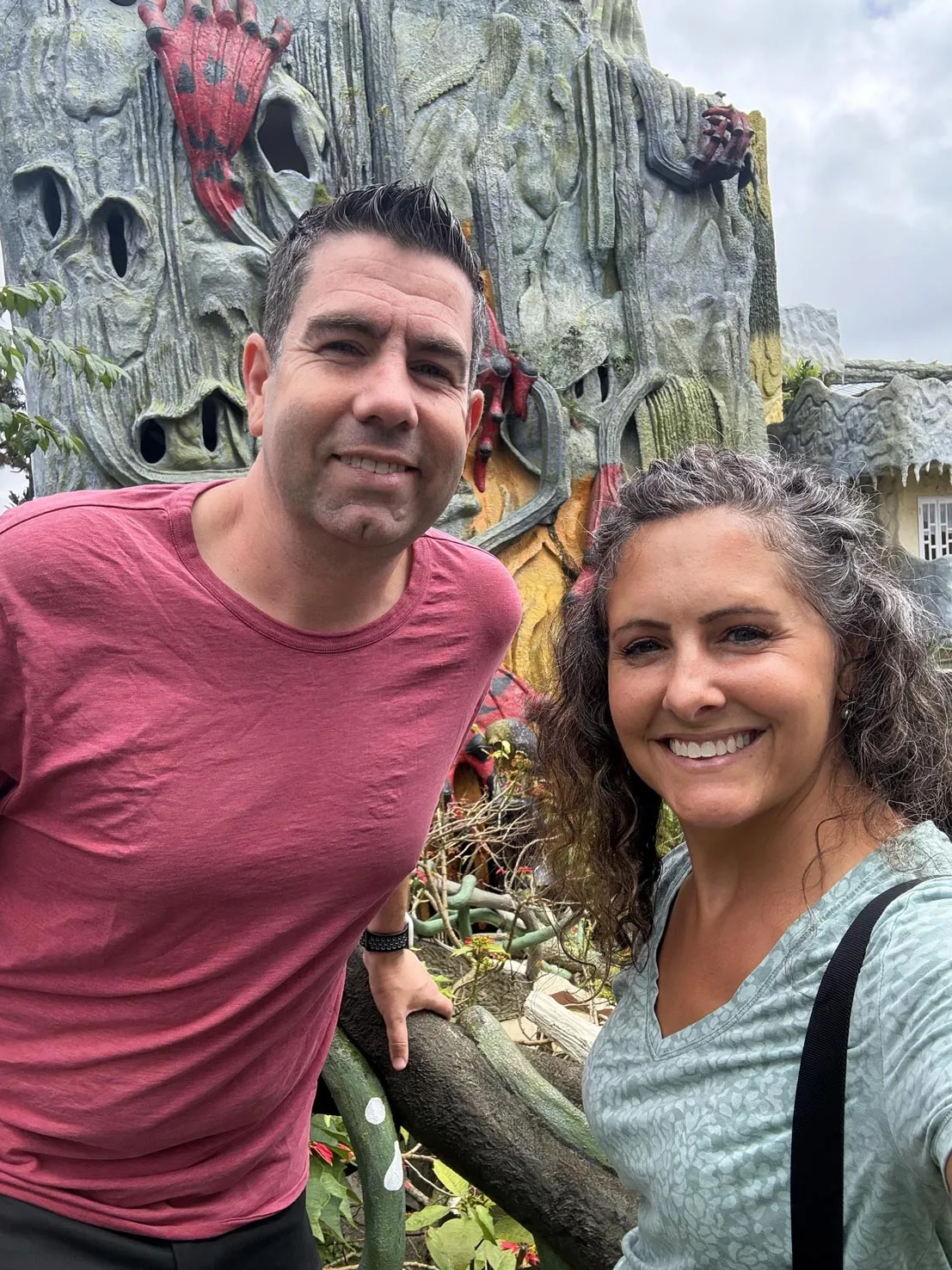
We enjoyed every minute, twist, turn, step and hallway at Crazy House in Dalat
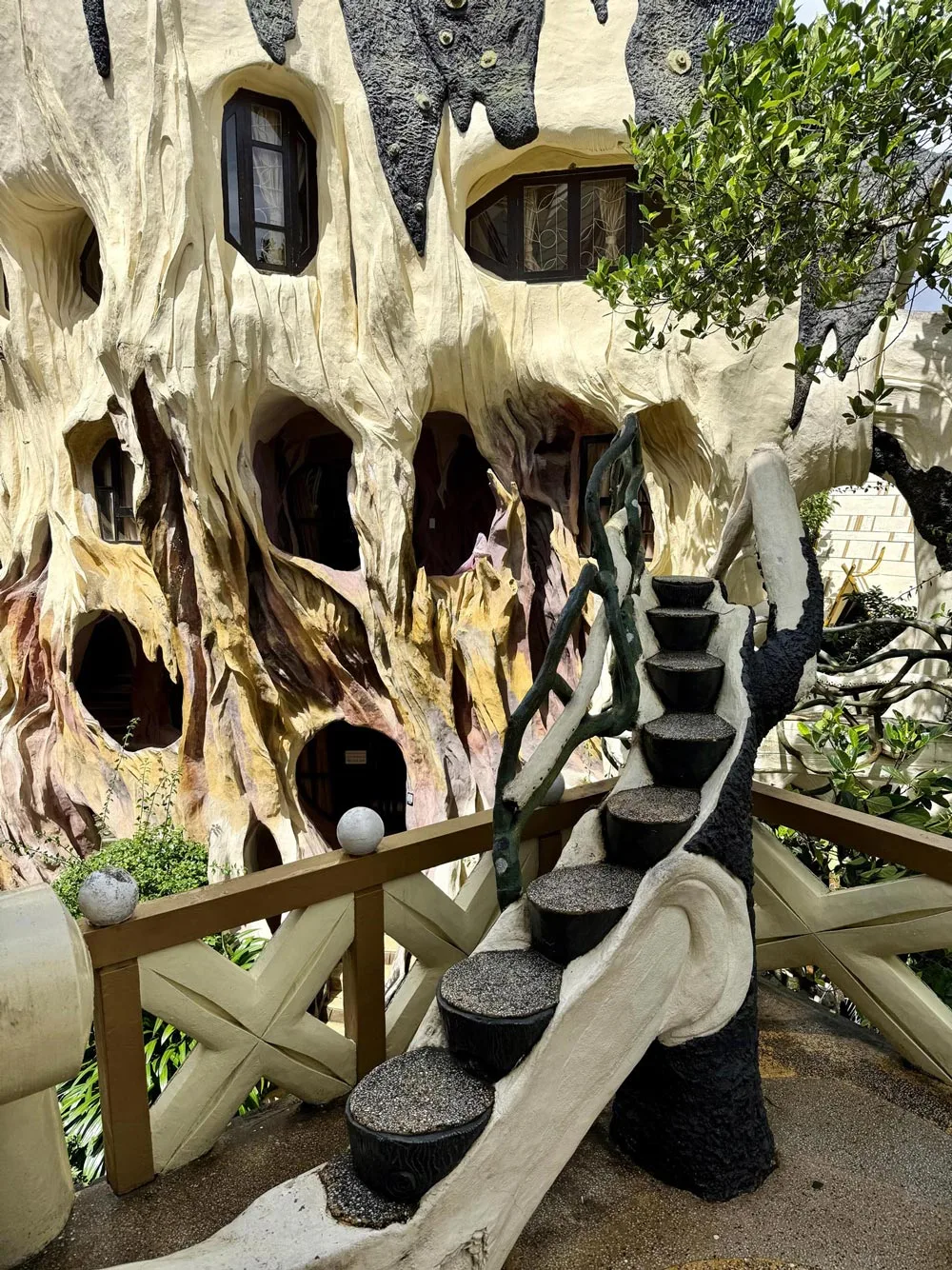
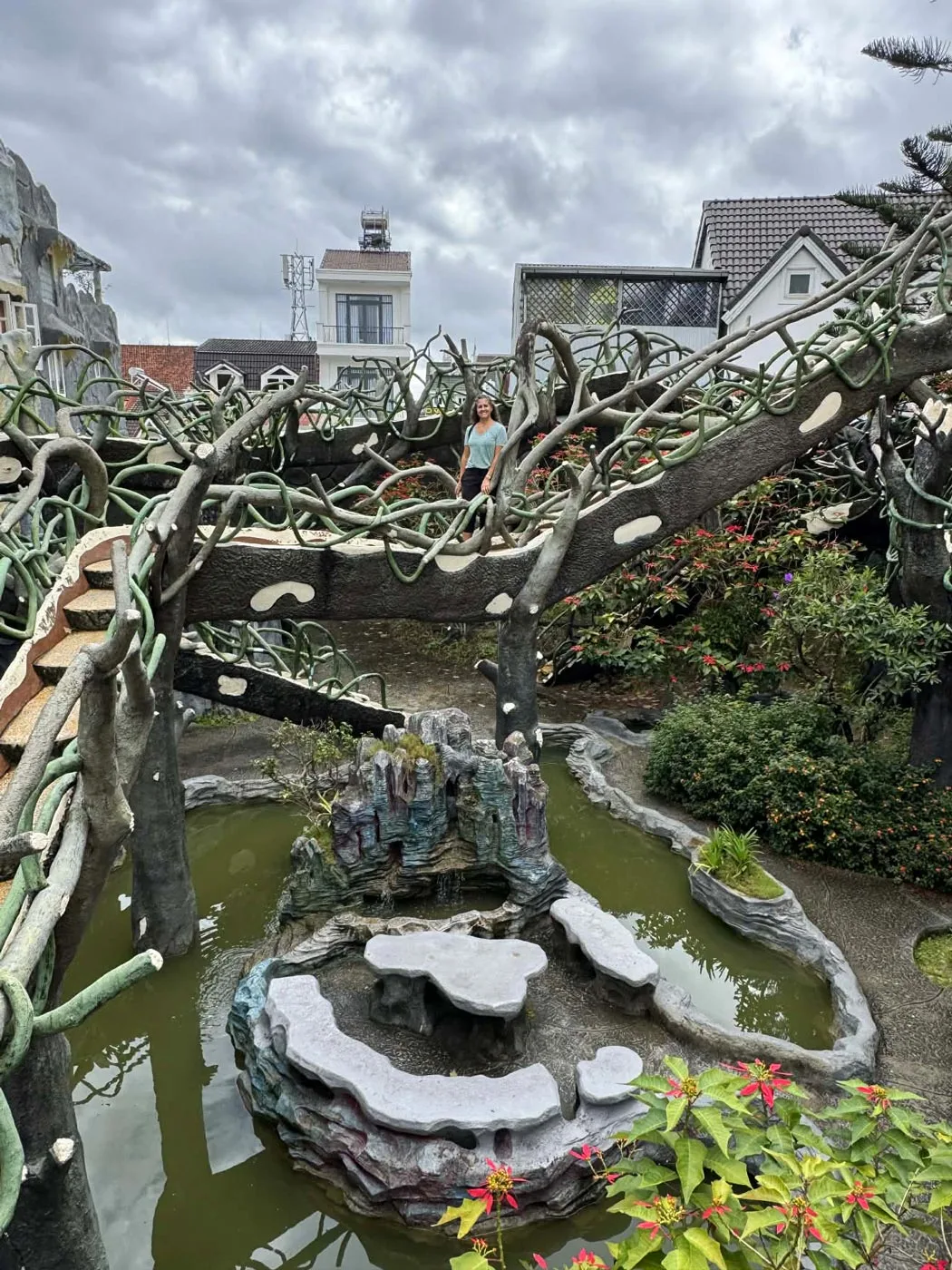
Outdoor Vine Stairs Cases
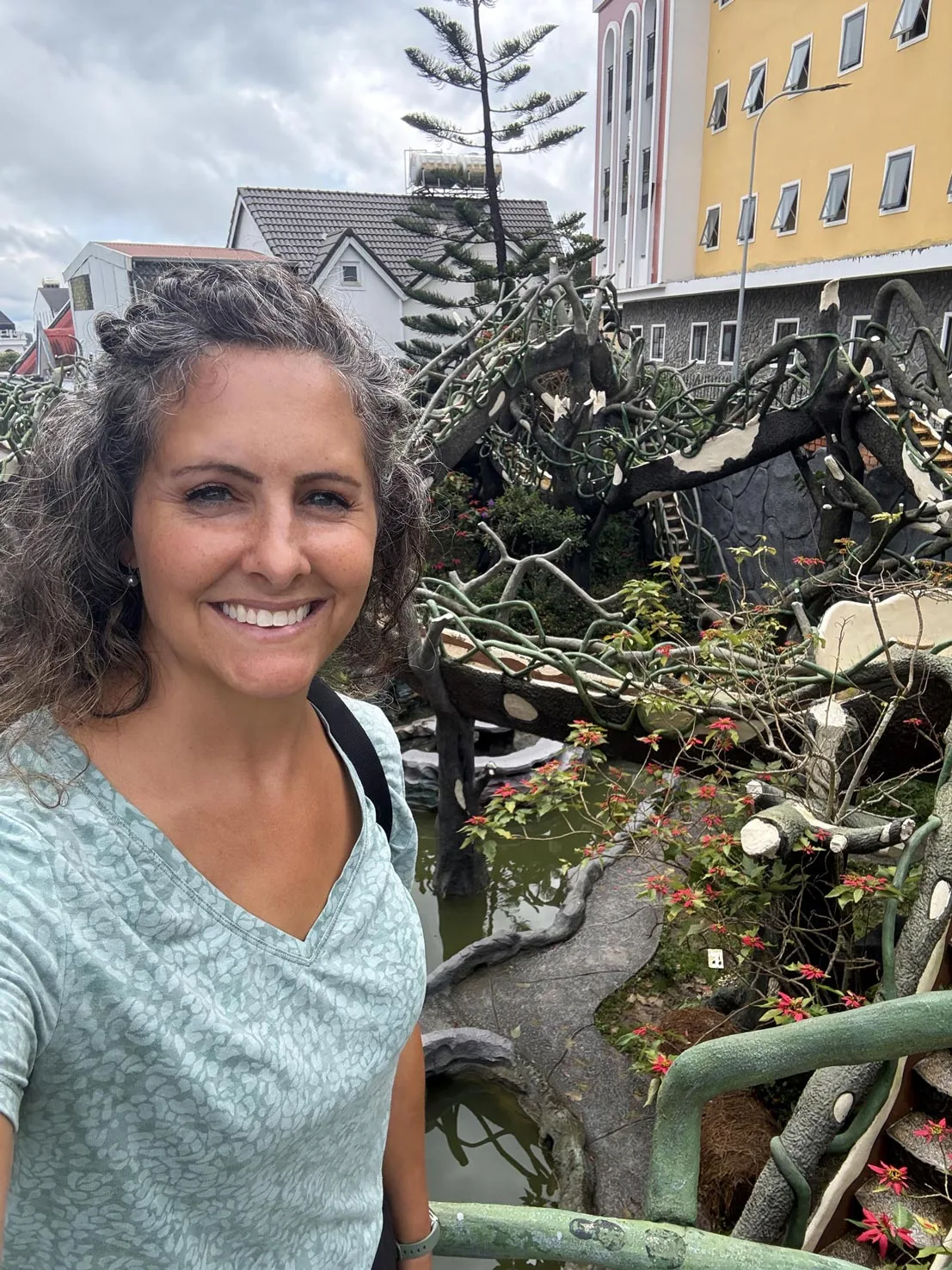
We enjoyed the vine staircases that seemed to twist and turn around each other. They’re located behind the main buildings when you first walk in and feel a bit like a hidden feature until you’re eye level with the 3rd story bedroom windows from the neighboring homes.
There’s plenty to see from the ground if you’re not comfortable with the winding stairs, but for the full experience at Crazy House Dalat, be prepared for plenty of stairs and wear shoes with good tread since many of the steps are angled and may be wet from dew or rain.
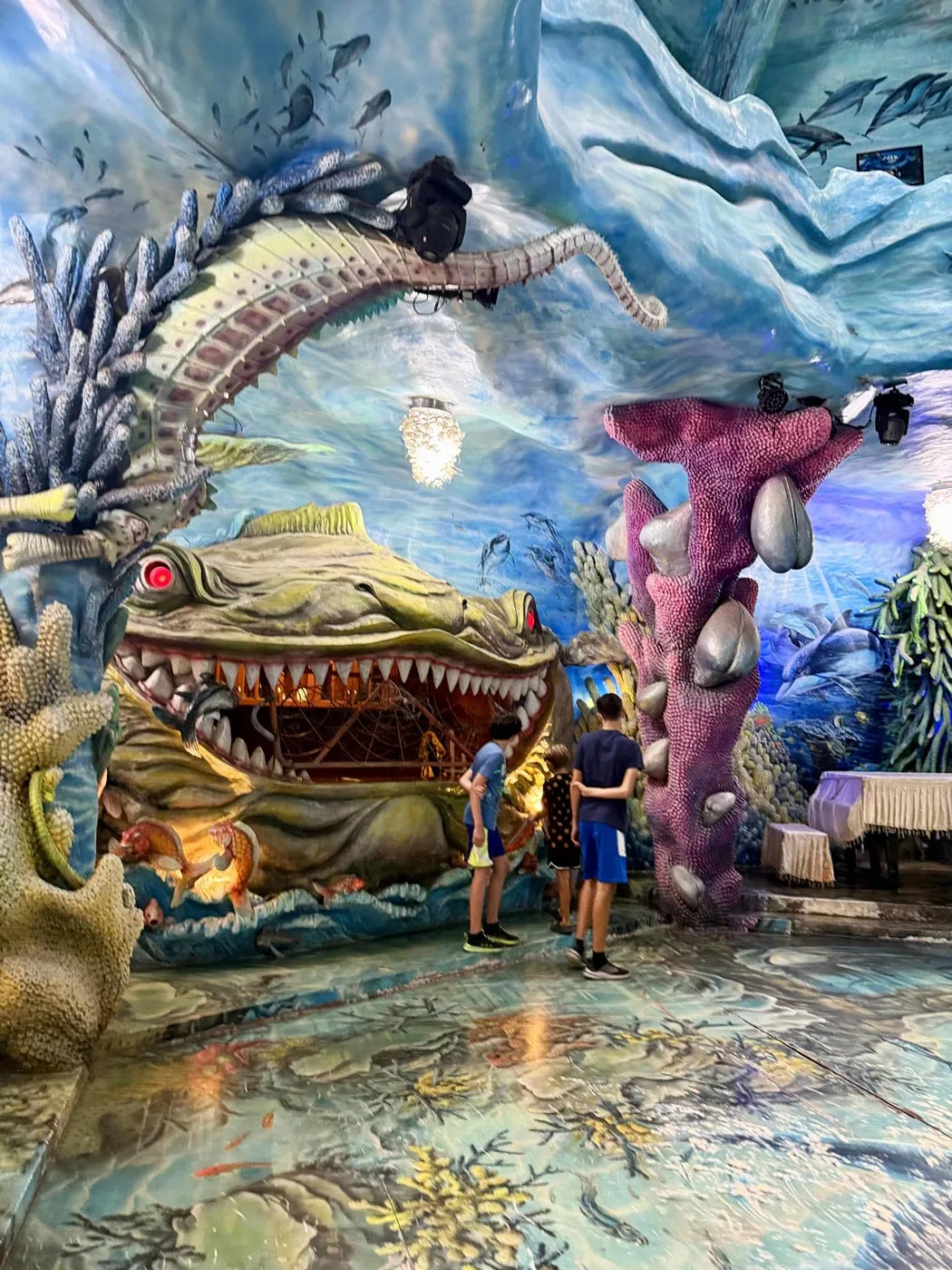
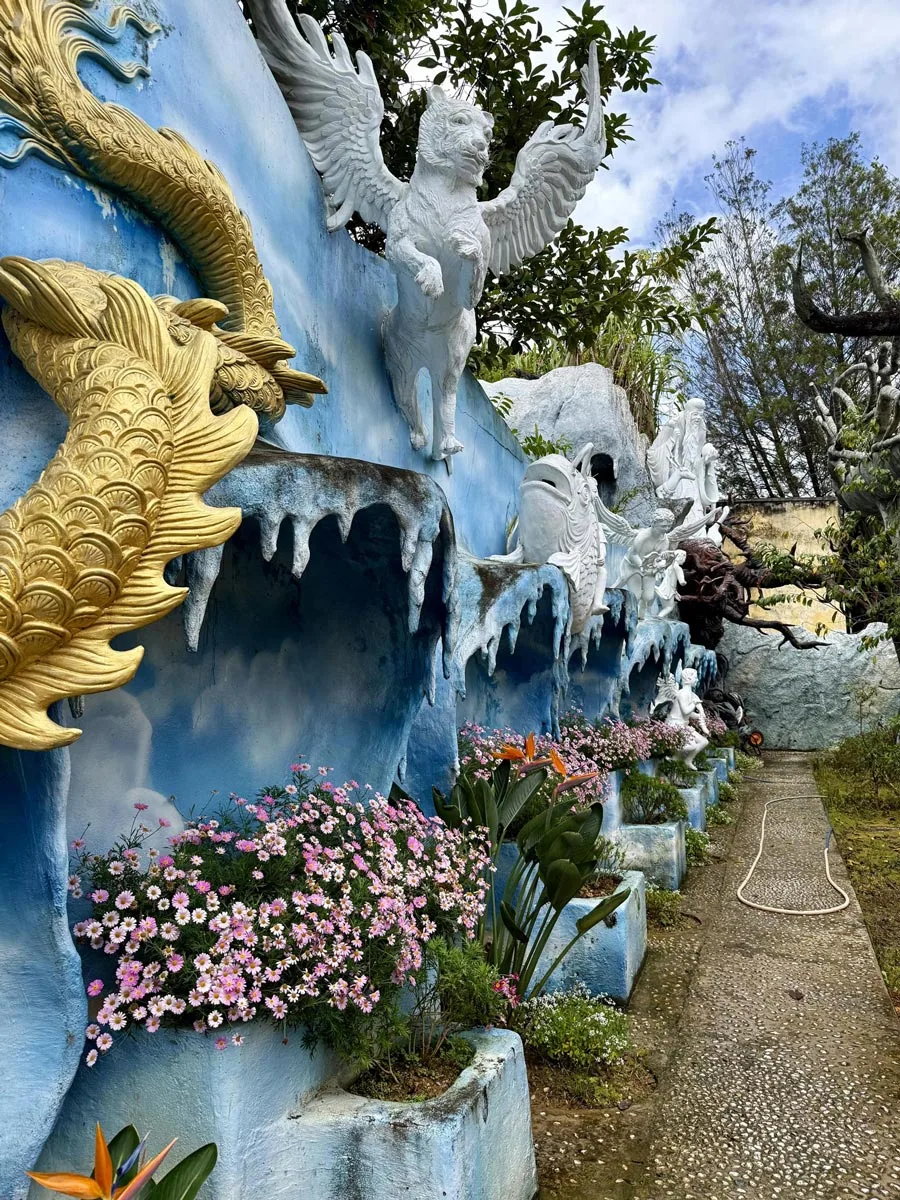
Under the sea stage and performance room
There weren’t any performances going on when we visited, and we’re purely speculating, but the shape of the water room made it seem like there was a platform with a dance floor or audience area, along with some backstage (or changing) rooms leading onto the stage.
We can imagine a performance there would be quite something to experience, but we have to wonder about the acoustics of the space (open vertically for multiple floors) or the distraction of being surrounded by the artistry.
Courtyards and Gardens
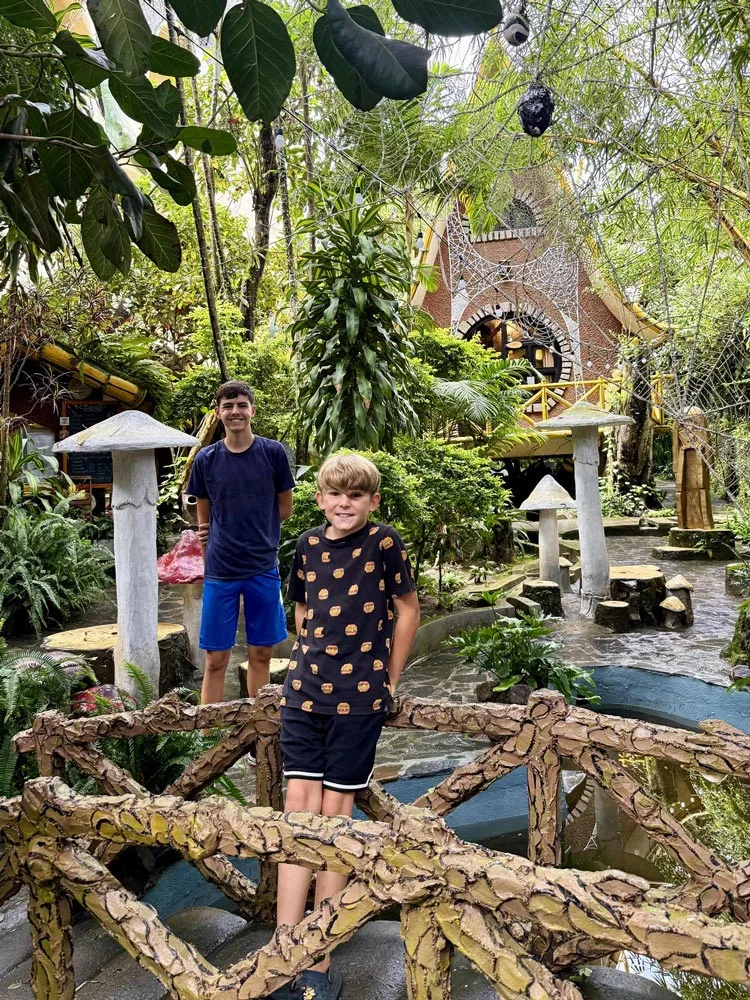
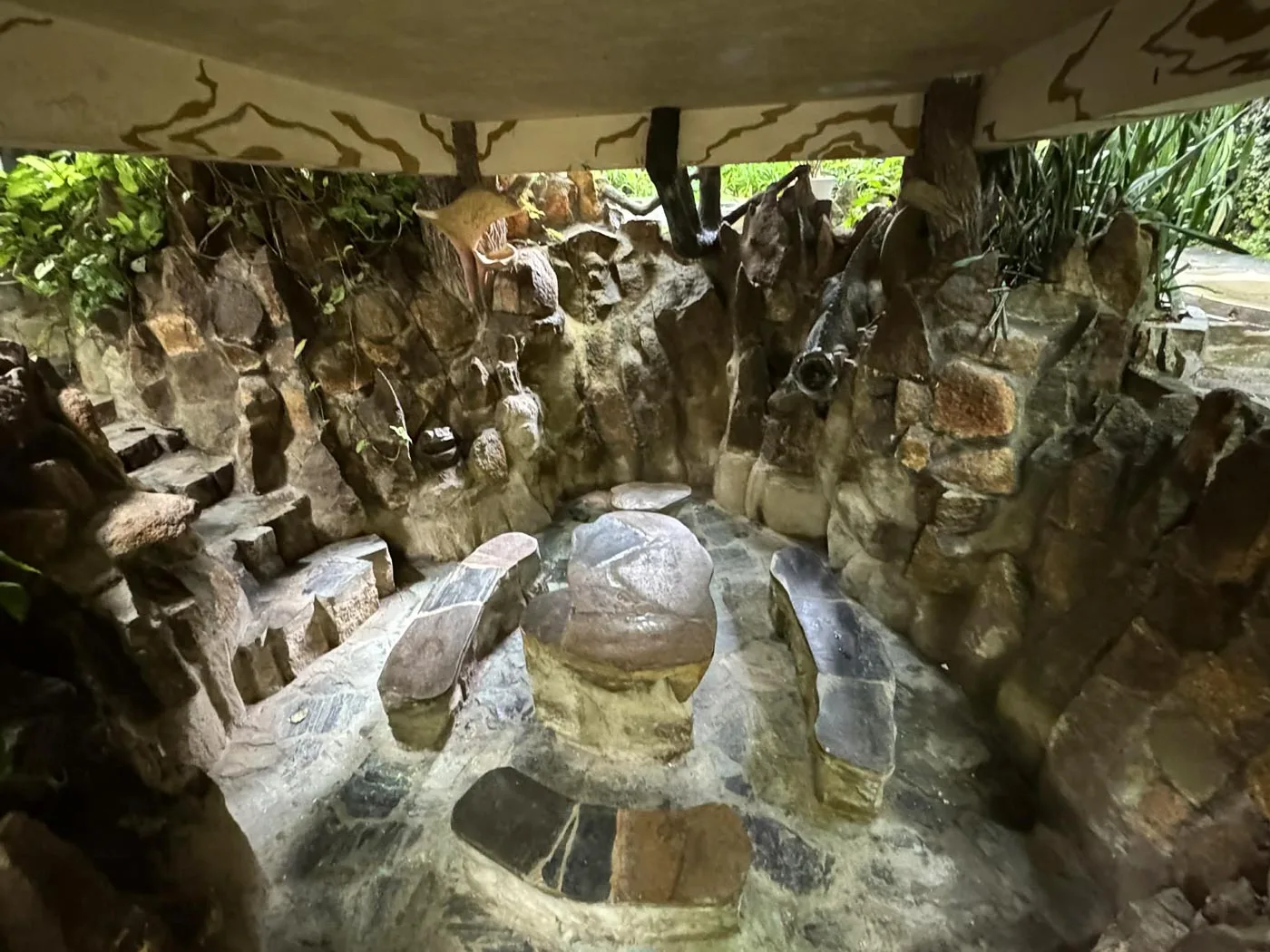
From seating areas for cafes to koi ponds to botanical plants, it seems like every direction you look, there’s something unexpected to experience.
In hindsight, we think staying at the Dalat Guesthouse as a family would have been the only way to fully take in all of the details and see the whole place. While there’s no time limit to a visit (outside of their opening hours) we did feel like every direction we turned was something we hadn’t yet noticed, or a detail we were pointing out to eachother.
Themed Guest Rooms
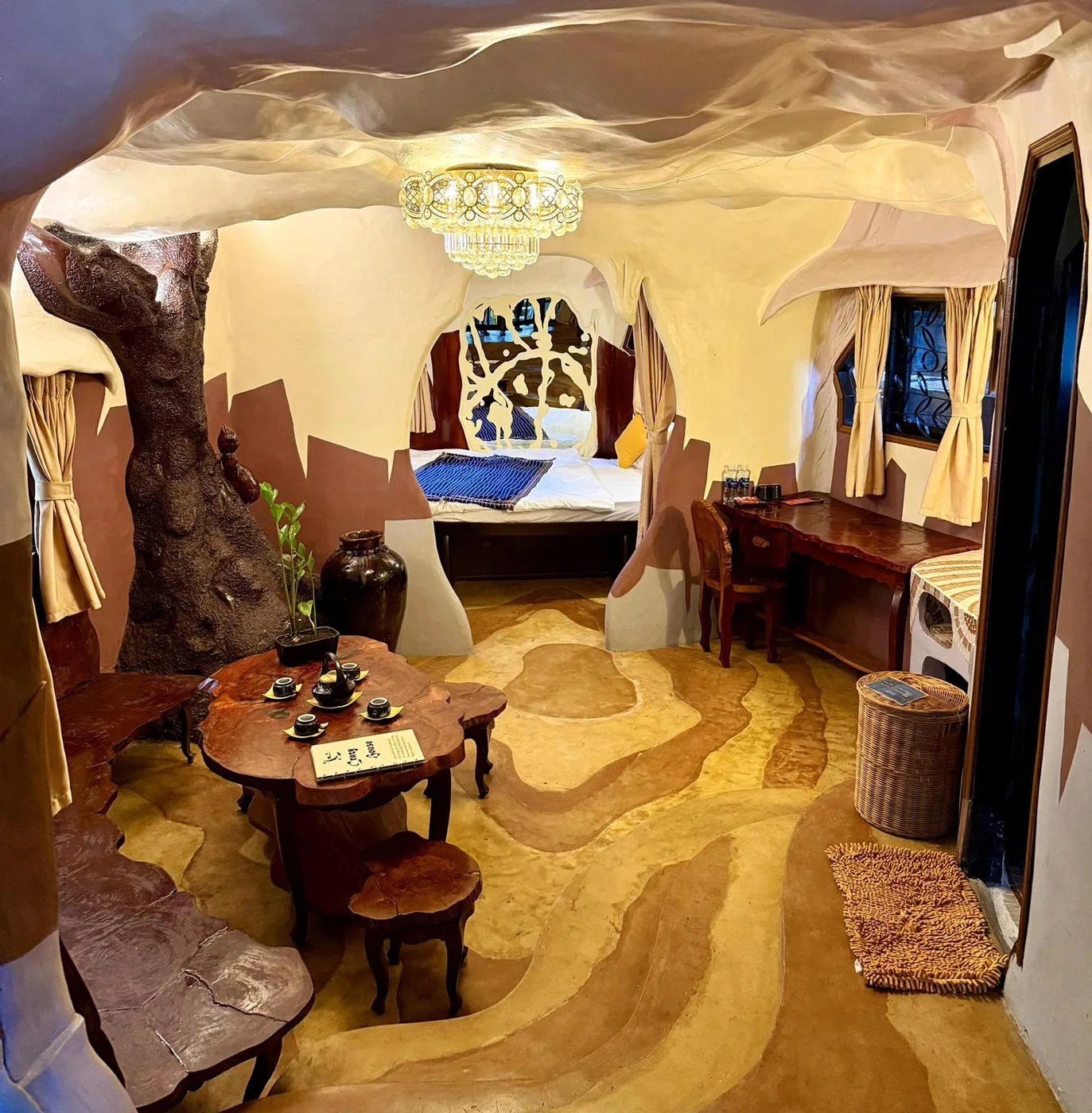
The accommodation features 10 themed rooms, including the Tiger Room, Eagle Room, Ant Room, Bear Room, and Bamboo Room, each representing different countries through animal symbolism and unique decorations. These comfortable rooms range in size from 10 to 20 square meters, designed to accommodate couples or families seeking an unconventional overnight experience.
Maximum room capacity was 4 people, so our family of five would have needed two rooms, and while pricing for this novelty is much more than the average hotel in Dalat, it was significantly less than the hotel prices we’re used to in North America or Europe.
Each room showcases organic shapes throughout, with cavern-like beds carved into tree-like structures, natural wooden furniture that appears to grow from the walls, and essential facilities integrated seamlessly into the organic design.
Room sizes vary to accommodate different group configurations, with some perfect for couples seeking a romantic experience and others suitable for families exploring Vietnam together. The deliberately rustic approach means guests should expect basic facilities integrated into artistic surroundings rather than luxury hotel amenities.
Each accommodation includes bathroom facilities, though these too follow the organic design philosophy with curved walls, natural materials, and unconventional layouts that make even basic functions feel like part of an artistic experience.
Dalat Crazy House Opening Hours and Tickets
The attraction operates daily from 08:30 to 19:00 for day visitors who want to explore the architectural wonder without staying overnight. Check the official Dalat Crazy House website for hours or unforseen closures before planning your trip. During these hours, guests can wander through the public areas, climb the spiral staircases, and experience the unique design elements throughout the property.
You can look into the guest rooms that are unoccupied, but if someone is staying in a room, it’s not publicly accessible.
The entrance fee for day visitors is 40,000 VND (approximately $1.75 USD), making it one of Dalat’s most affordable major attractions. This modest cost provides access to most areas of the building, allowing visitors to experience the unconventional architecture and take photographs throughout the site.
Advanced booking is recommended, particularly during peak tourist seasons and Vietnamese holidays when the unique accommodation attracts visitors from around the world and where the site may reach capacity for day visits.
Amenities and Services
The property features a coffee shop with garden views that serves freshly brewed Vietnamese coffee and light snacks throughout the day. This peaceful space allows visitors to relax while surrounded by the organic architecture and natural gardens that complement the building’s environmental philosophy.
The gift shop features local handicrafts, paintings, and Dalat cultural items that reflect the region’s artistic heritage and natural beauty, offering souvenirs that capture the spirit of the Crazy House while supporting local artisans and the property’s continued maintenance.
Nearby Attractions and Activities
There are plenty of things to do in Dalat within comfortable walking distance, making the nga crazy house an excellent base for exploring Dalat’s primary cultural and natural attractions. The central location allows visitors to easily the area. With only 10 rooms, most people don’t stay on site, but rather visit as part of a day trip to Dalat or walk (or take a grab taxi) from their Dalat hotel.
Summary of our Dalat Crazy House Review:
The crazy house Dalat represents more than just unconventional accommodation or architectural curiosity—it stands as artwork that challenges perceptions about the relationship between human construction and natural environment. Whether you choose to stay overnight in one of the themed rooms or simply explore during the day, our family created unforgettable memories here that captures the imagination and inspires reflection on creativity, nature, and the wonderful possibilities that emerge when conventional rules are abandoned.
When we got back to our hotel, all three of our boys were exhausted from the climbing, sliding, walking, and exploring, and our youngest was inspired to start crafting.
For families seeking experiences beyond typical tourist attractions, the Hang Nga guesthouse provides an opportunity experience a work of art while being accessible to all of thing family friendly activities in Dalat.
-

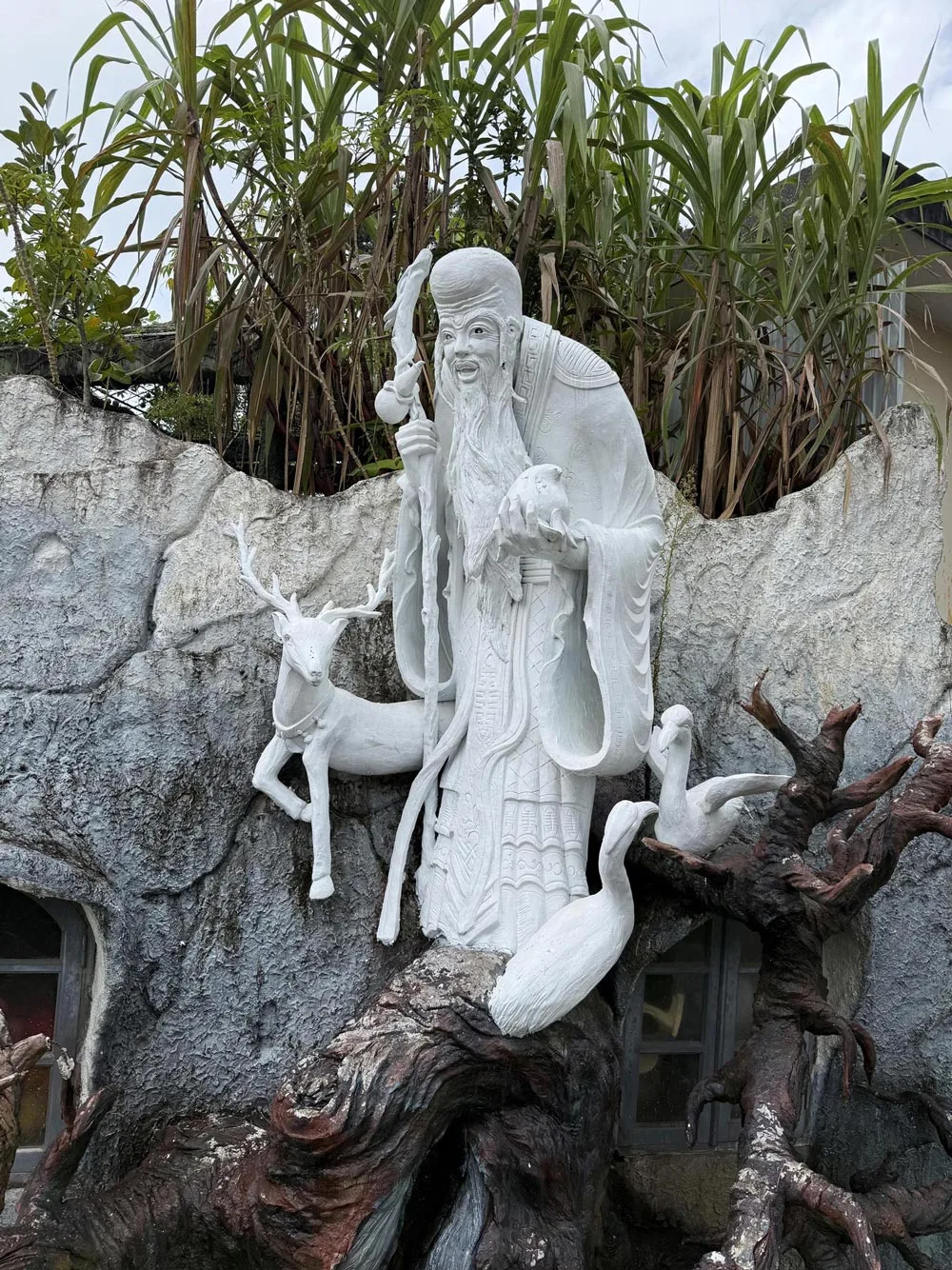
- One of the buildings where you can enjoy coffee at the Dalat Crazy House
-
- We enjoyed every minute, twist, turn, step and hallway at Crazy House in Dalat
-
- This is the part I mentioned: Small steps, steep, and no railing at Crazy House in Dalat

-
- Our family Review of Crazy House, Dalat: 50 toes up!
Some of our other favorite Dalat Activities:
Read our full list of things to do with kids in Dalat, Vietnam!